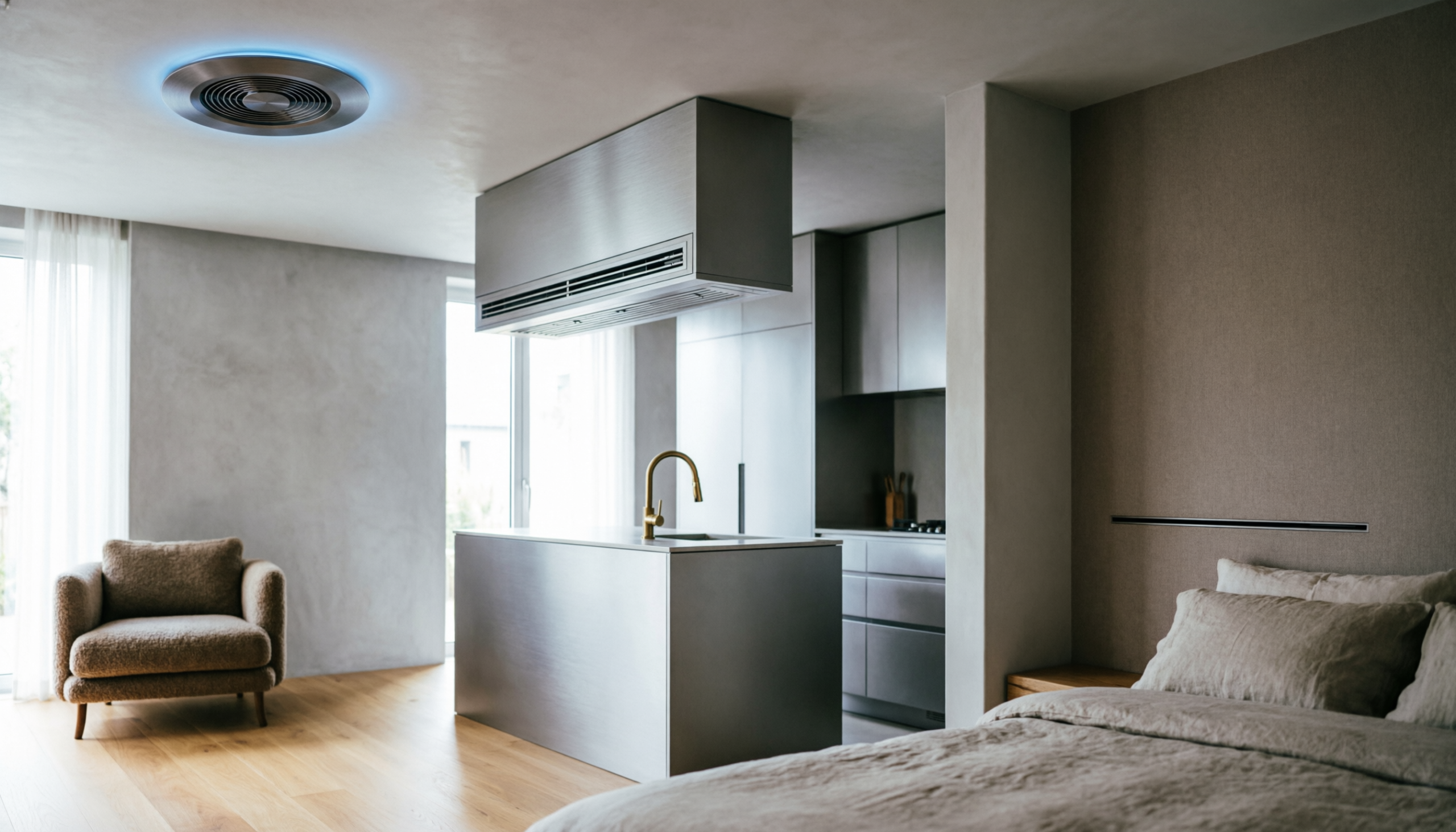
Smart Vents: The Future of Room-by-Room Control
Heating and cooling systems rarely match how homes are actually used. One room stays empty while another overheats.
Smart vents fix that mismatch by managing airflow room by room, without stressing the HVAC system. The result is steadier comfort, lower waste, and a system that finally works with daily life.
Solving a Massive HVAC Structural Flaw
Most HVAC systems were built around a simple assumption: every room needs the same airflow all the time. That assumption falls apart in real homes.
Bedrooms sit empty all day. Guest rooms go unused for weeks. Meanwhile, kitchens and living rooms carry the load. Traditional ductwork cannot adjust.
This leads to three common problems:
- Uneven temperatures across rooms
- Constant thermostat adjustments
- Wasted energy pushing air where it is not needed
Smart vents address the root issue. Instead of forcing the whole house into one setting, they allow airflow to follow actual usage.
The “Closed Vent” Myth
Old advice says closing vents in unused rooms saves money. It sounds logical. It is also wrong.
Manually closing vents creates pressure buildup inside the duct system. That pressure has nowhere to go, so it pushes back toward the blower.
What happens next:
- The blower motor works harder than designed
- Air leaks increase at weak duct joints
- Efficiency drops instead of improving
Over time, this strain can shorten system lifespan. In short, closing vents trades a small comfort gain for long-term mechanical stress.
The Smart Solution
Smart vents do something manual vents cannot: they measure and respond.
Each vent uses built-in pressure sensors to monitor airflow. When airflow reaches a risky level, the vent automatically adjusts to keep the system balanced.
Key differences from manual vents:
- They never fully “choke” the system
- They open slightly when pressure rises
- They coordinate with other vents in the home
This keeps the HVAC system operating within safe limits while still redirecting air where it matters.
Don’t Heat the Guest Room if No One Is There
This is the simplest way to think about it.
Heating or cooling an empty room is wasted effort. Smart vents apply that logic automatically.
Typical setup:
- Sensors detect occupancy or follow schedules
- Airflow reduces in unused rooms
- Active spaces receive more conditioned air
Real-world example:
During weekdays, bedrooms receive minimal airflow while the living room stays comfortable. At night, the pattern reverses without touching the thermostat.
This targeted control reduces run time and improves comfort at the same time.
Compatibility Guide: Checking Your Duct Size
Smart vents are not universal. Getting the wrong size leads to poor fit and airflow issues.
Here is how to check properly:
Step 1: Remove an existing vent cover
Measure the duct opening, not the outer grille.
Step 2: Note standard sizes
Most homes use:
- 4×10 inches
- 4×12 inches
- 6×10 inches
Step 3: Check depth clearance
Some smart vents are deeper than standard ones due to internal motors and sensors.
Step 4: Count total vents
Systems with too few vents may not benefit as much. Smart vent systems work best with multiple controllable points.
If sizes vary across rooms, plan for a mix of compatible models rather than forcing one size everywhere.
The “System Harmony”
Smart vents work best when connected to a smart thermostat. Without that link, performance is limited.
When both systems communicate:
- The thermostat understands room-level demand
- Vents adjust based on system activity
- Heating and cooling cycles become more efficient
Without integration, vents react blindly. With integration, the system behaves as one coordinated unit.
Strong pairings often include:
- Smart vents + central hub
- Hub + smart thermostat
- Optional room sensors for finer control
This setup avoids conflicting signals and delivers the best return on investment.
Reliable Smart Vent Options Worth Considering
These models consistently perform well in real homes and are widely used across the U.S.
1. Flair Smart Vent (Puck System)
- Strong ecosystem with room sensors
- Works well with major thermostats
- Quiet operation
- Best for whole-home setups
2. Keen Home Smart Vent
- Pressure-aware airflow control
- Solid build quality
- Simple installation
- Good for smaller setups or upgrades
3. Flair Smart Vent 2.0 (Standalone Mode)
- Can run without full system integration
- Easier entry point
- Expandable later
4. Ecovent (if available in resale markets)
- Advanced zoning logic
- Strong performance history
- Limited availability, but still respected
5. Flair Bridge + Vent Combo Kits
- Bundled setup for faster installation
- Better coordination out of the box
Quick reality check:
Cheap, no-name smart vents often skip pressure sensing. That defeats the whole purpose. Cutting corners here risks the same problems as manual vent closing.
FAQs
1. Do smart vents actually lower energy bills?
Yes, but not magically. Savings come from reduced runtime and better airflow distribution. Homes with large unused areas see the biggest impact.
2. Can smart vents damage an HVAC system?
Only if poorly designed or improperly installed. Quality models with pressure sensors are built specifically to avoid system strain.
3. How many smart vents are needed?
At least a few per zone for meaningful control. Installing just one or two limits effectiveness and can create uneven pressure patterns.
Final Take
Smart vents solve a problem traditional HVAC systems ignore: uneven usage across rooms. By managing airflow intelligently and safely, they improve comfort without overworking the system.
The real value comes from pairing them with a smart thermostat and installing enough units to balance airflow across the entire home.


