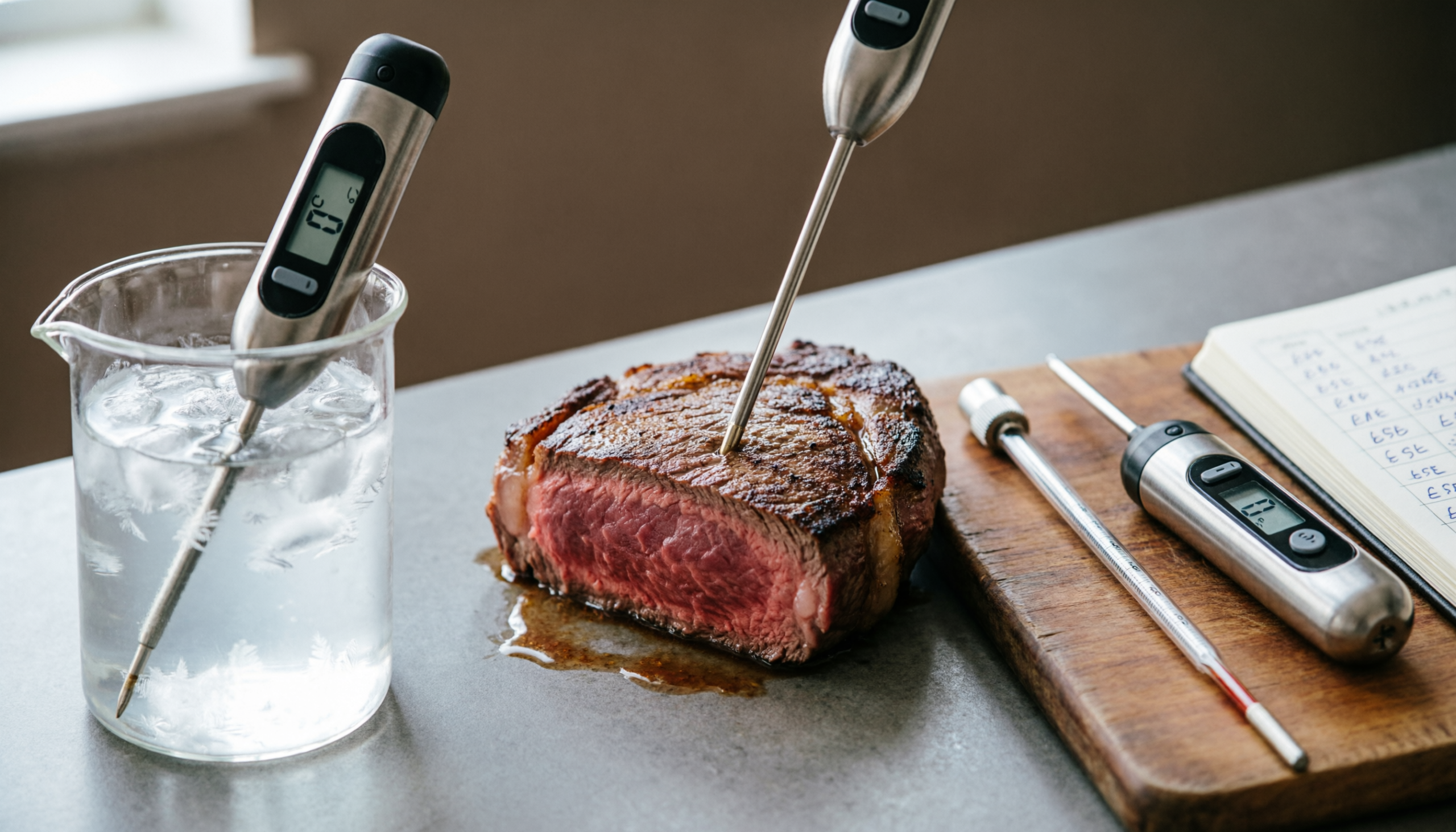
How to Calibrate Smart Meat Thermometers for Pro Results
A smart meat thermometer earns trust through accuracy, not features. Even premium models drift over time, especially with heavy kitchen use.
Proper calibration keeps readings tight, prevents overcooking, and ensures consistent results across grills, ovens, and smokers.
Small adjustments make a noticeable difference in texture, flavor, and confidence at the table.
Accuracy Mastery for the Meater, MeatStick, and Chef iQ
High-end smart thermometers such as Meater, MeatStick, and Chef iQ rely on internal sensors and software interpretation. That combination works well, but only when readings align with reality.
Out of the box, most units land within ±2°F. That sounds precise, yet cooking margins are narrow. A steak target of 130°F for medium-rare becomes 133°F with a small drift. That shifts doneness more than expected.
Frequent causes of inaccuracy:
- Repeated high-heat exposure
- Residue buildup on probes
- Battery inconsistencies inside wireless probes
- Minor factory variance
Calibration corrects these small errors before they compound.
Why Calibration Matters: A 3-degree error is the difference between Medium-Rare and Medium
Cooking is chemistry. Proteins tighten, moisture shifts, and fats render within tight temperature windows.
A simple breakdown:
- 125–130°F → medium-rare, soft and juicy
- 135–140°F → medium, firmer with less moisture
That 3–5°F gap defines the eating experience. Inconsistent readings lead to:
- Dry chicken despite “safe” readings
- Overcooked steak that looked perfect on the app
- Pulled pork that stalls or finishes incorrectly
Accuracy removes guesswork. Every cook becomes repeatable.
The Ice Bath Method (Scientific Step-by-Step)
The ice bath method provides a reliable baseline: 32°F (0°C). This is the gold standard for calibration because freezing point remains stable under normal kitchen conditions.
What is needed:
- Crushed ice (not cubes if possible)
- Cold water
- Tall glass or container
- Smart thermometer probe
Steps:
- Fill the glass with ice first
Pack it tightly. Air gaps reduce accuracy. - Add cold water slowly
Water should fill gaps, not float the ice. Aim for a slushy consistency. - Stir and wait 60 seconds
This stabilizes temperature across the mixture. - Insert the probe correctly
The sensing tip must sit in the center of the ice slurry. - Keep distance from glass and ice chunks
Contact with the glass or solid ice skews readings. The probe must sit in liquid between ice pieces. - Wait for the reading to stabilize
Most smart thermometers take 20–60 seconds.
Expected result:
- 32°F (0°C)
If the reading is off:
- Example: 35°F → +3°F error
- Example: 30°F → −2°F error
That difference becomes the calibration offset.
App-Level Adjustment
Smart thermometers allow calibration through their companion apps. This is where the correction happens.
Meater app calibration process:
- Open settings
- Navigate to probe settings
- Select calibration or “offset adjustment”
- Enter the difference from 32°F
Example:
- Measured 35°F → input −3°F offset
- Measured 30°F → input +2°F offset
The system then adjusts all future readings automatically.
Practical notes:
- Adjust only after a stable reading
- Repeat the ice bath test once after setting the offset
- Avoid stacking corrections repeatedly; reset if unsure
Chef iQ and MeatStick follow similar logic, though menu names vary slightly.
Why boiling water isn’t 212°F in Denver
Boiling point changes with elevation. Lower air pressure means water boils at a lower temperature.
Key reality:
- Sea level: 212°F (100°C)
- Higher elevations: lower boiling point
Approximate guide:
- 1,000 ft → ~210°F
- 3,000 ft → ~206°F
- 5,000 ft → ~203°F
Ignoring altitude leads to false calibration if boiling water is used.
How to adjust:
- Check local elevation
- Use an altitude boiling chart or calculator
- Compare thermometer reading to expected boiling point
Example:
- Expected boiling point: 205°F
- Thermometer reads: 208°F
- Offset needed: −3°F
When to use boiling method:
- As a secondary check after ice bath
- To confirm performance at high temperatures
Ice bath remains the primary calibration method due to stability.
Storage & Care: How “Battery Drift” affects accuracy
Wireless smart probes depend on internal batteries. Over time, voltage inconsistencies affect sensor output.
Signs of battery-related drift:
- Slow response time
- Fluctuating readings
- Inconsistent results between cooks
Maintenance habits that prevent this:
1. Keep the charging block clean
Grease and debris interfere with contact points. Poor charging leads to unstable readings.
2. Fully seat the probe after cleaning
Partial contact results in incomplete charging cycles.
3. Avoid long-term storage with a dead battery
This shortens lifespan and increases calibration drift.
4. Clean probes properly
- Warm water
- Mild soap
- No soaking of wireless sections
5. Recalibrate monthly with regular use
Heavy grilling seasons demand more frequent checks.
Recommended Smart Thermometers
These models have consistent sensor performance and stable app calibration controls:
- MEATER Plus Wireless Smart Meat Thermometer
Strong Bluetooth range, reliable calibration settings, widely used for grilling and smoking. - The MeatStick X Set
Dual sensors, extended range via WiFi bridge, steady readings even in long cooks. - Chef iQ Smart Thermometer
Fast app interface, clear calibration controls, dependable for everyday oven use. - ThermoPro TempSpike Wireless Thermometer
Budget-friendly option with surprisingly consistent accuracy when maintained well.
Each of these supports offset adjustments, which is essential for long-term accuracy.
FAQs
1. How often should calibration happen?
Once a month with regular use. Before major cooking events such as holidays or large gatherings.
2. Can calibration fix a badly damaged probe?
No. Calibration corrects minor deviations. A damaged sensor produces inconsistent readings and requires replacement.
3. Is the ice bath method enough?
Yes for most situations. Boiling water serves as a secondary check, especially for high-temperature cooking.
Final Take
Accurate temperature control separates average cooking from consistent, reliable results. Calibration takes a few minutes but prevents wasted meals and frustration.
Ice bath testing, proper app adjustments, and simple maintenance habits keep smart thermometers dependable. Precision in temperature leads directly to better texture, flavor, and confidence in every cook.


