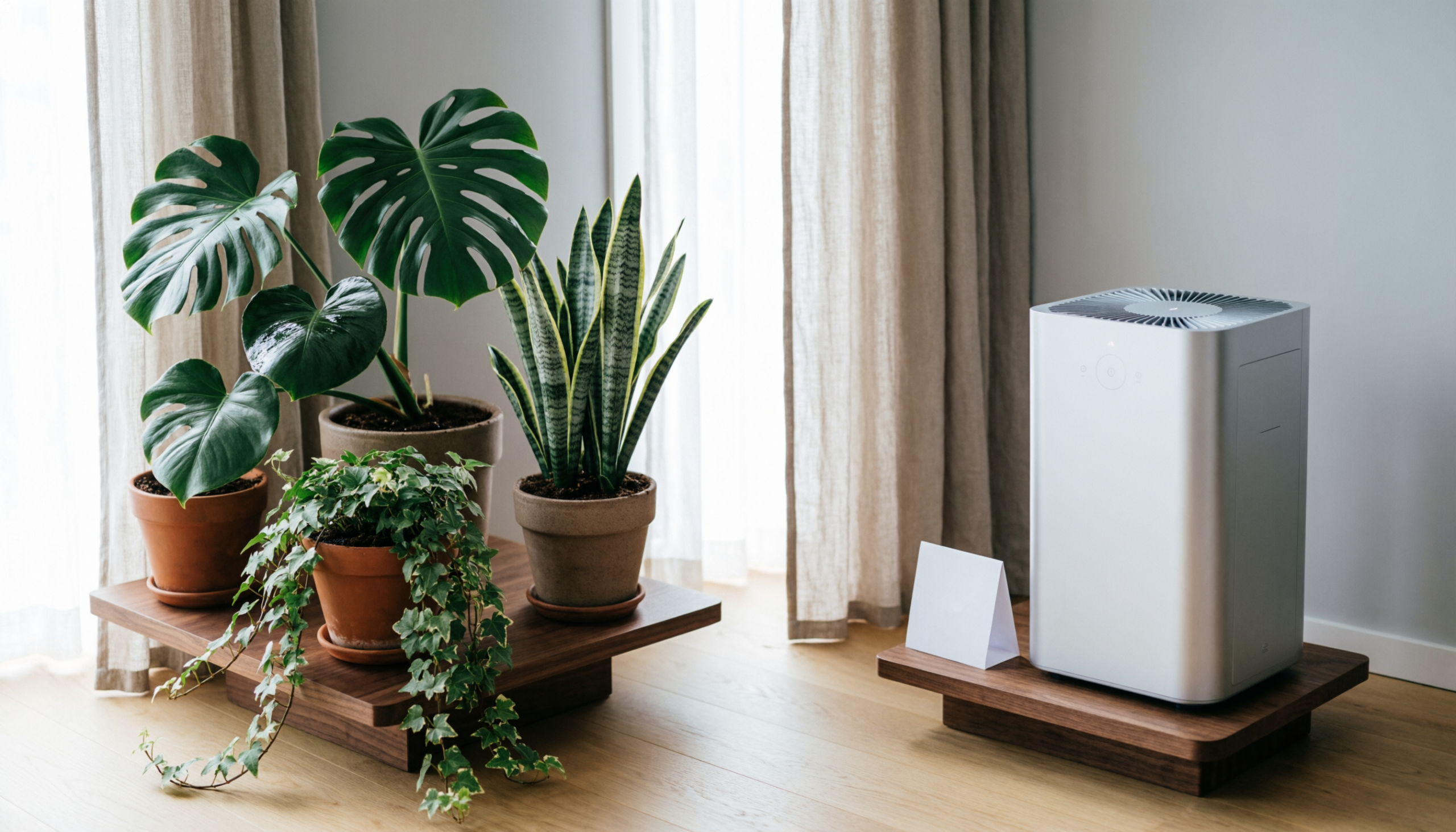
How to Purify Indoor Air Naturally: Plants vs. HEPA Filters
Clean indoor air comes down to removing what actually floats and lingers in daily life.
Dust, pollen, smoke, and odors behave very differently from the trace gases plants can absorb.
This matters when choosing between greenery and a proper filter.
The Short Answer
Do plants actually purify indoor air?
While plants can absorb small amounts of certain gases, the well-known NASA study happened in a sealed lab.
In a typical home, it would take around 10 plants per square foot to match the air-cleaning power of one HEPA filter. Plants improve the feel of a room. HEPA filters improve the air you breathe.
The NASA Study vs. Real-World Homes
The NASA research often gets quoted without context. It tested plants in a closed chamber with no airflow. Real homes are the opposite. Doors open, windows leak, people move around, and air keeps circulating.
What actually cleans indoor air in a meaningful way is air exchange and filtration, not slow absorption through leaves.
- CADR (Clean Air Delivery Rate) measures how fast a device removes particles like dust and pollen
- A HEPA filter captures 99.97% of particles as small as 0.3 microns
- Plants do not move air or trap particles at that scale
Dust from fabrics, pet dander, and outdoor pollution enter constantly. A plant cannot keep up with that volume. A filter can cycle the same air multiple times per hour and steadily reduce what is floating around.
Top 5 “Best” Plants for Air (If They’re Still Part of the Plan)
Plants still earn a place indoors. They soften spaces, add moisture in dry conditions, and make rooms feel lived in. Just keep expectations realistic.
Here are solid choices that are easy to maintain:
- Snake Plant
Tough, survives low light, minimal watering - Aloe Vera
Practical for small burns, compact growth - Spider Plant
Handles neglect well, good for shelves or hanging pots - Peace Lily
Helps signal watering needs by drooping early - Areca Palm
Adds fullness to empty corners
Helpful add-ons that actually prevent plant problems:
- Moisture meters to avoid overwatering
- Simple planters with drainage holes to prevent root rot
The mistake most homes make is not the plant choice. It is overwatering and poor airflow around them.
Why Humidity from Plants Can Be a Coastal Problem
Extra moisture sounds harmless until it builds up. In humid climates, especially coastal areas, indoor air already holds a lot of water.
Adding multiple plants can push things too far:
- Condensation on windows
- Musty smells in corners
- Mold growth behind furniture or curtains
Bathrooms, kitchens, and poorly ventilated rooms are the first to show problems. Once mildew starts, it spreads quietly and becomes harder to remove than dust.
In these conditions, more plants can make air quality worse, not better.
When to Give Up on Plants and Buy a Filter
There is a point where greenery stops helping and starts distracting from the real issue.
Watch for these signs:
- Dust returns quickly after cleaning
- Morning congestion or sneezing indoors
- Lingering cooking or musty smells
- Visible particles in sunlight
- Pets shedding heavily
At that stage, a HEPA air purifier is not optional. It directly tackles what is in the air, not just what looks good on a shelf.
Practical setup that works:
- Place a HEPA unit in the most used room
- Run it continuously at a moderate speed
- Keep doors and windows managed to control incoming dust
Bottom Line
Plants improve how a space feels. They do not clean air at a meaningful scale in everyday homes.
A HEPA filter handles particles, odors, and allergens with consistency.
The strongest setup uses both wisely, but when health is the priority, filtration does the heavy lifting.