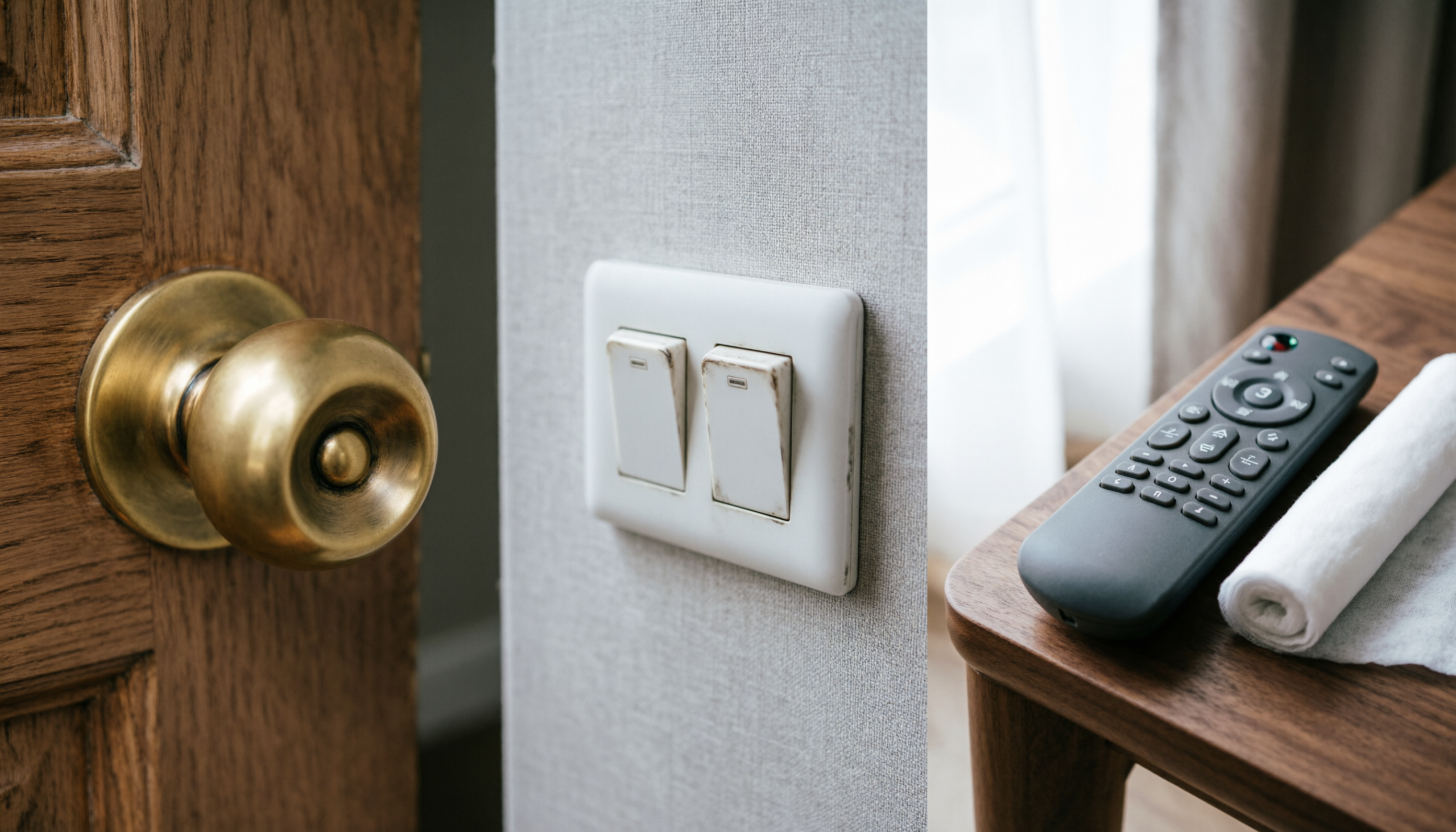
The “High-Touch” Audit: Cleaning Doorknobs, Switches, and Remotes
Germs build up fastest on the small surfaces touched all day, not the obvious dirty spots.
A focused high-touch audit cuts that buildup at the source and keeps everyday illness from spreading across the home.
The High-Touch Checklist
These areas collect skin oils, food residue, and moisture. That mix feeds bacteria and helps it stick.
- Light switches
- TV remotes
- Refrigerator handles
- Coffee maker buttons
- Cabinet pulls
- Door handles and locks
- Phone screens and cases
- Faucet handles
- Toilet flush levers
- Appliance touch panels
Clean these on a rotating schedule, with the first five done at least twice a week.
The Biofilm Factor: Why These Spots Stay Dirty
A quick wipe often fails because of biofilm. Skin oils form a thin, sticky layer that traps bacteria and shields it from light cleaning.
Dust and food particles bind into that layer, making it harder to remove with plain water.
Result: a surface that looks clean but still carries odor and microbes. Any routine that skips proper cleaning agents leaves that layer behind.
The “Dry-Wipe” Mistake: Why a Surfactant Matters
Dry cloths push dirt around. Even damp cloths struggle without a surfactant. A surfactant breaks the bond between oils and the surface, lifting grime so it can be removed instead of smeared.
Practical options:
- 70% isopropyl alcohol wipes for quick disinfection
- Mild dish soap diluted in warm water for routine cleaning
- UV-C sanitizing wands as a secondary step, not a replacement for wiping
Use wipes after visible dirt is removed. Disinfection works best on a clean surface.
The “High-Touch” Audit: Cleaning Doorknobs, Switches, and Remotes
Cleaning Electronics Without Short-Circuiting
Electronics need care. Too much liquid causes damage faster than dirt.
Safe method:
- Power off and unplug the device
- Use a dry microfiber cloth to remove loose dust
- Lightly dampen a cloth or use alcohol wipes, never spray directly
- Clean buttons and seams with precision cotton swabs
- Dry immediately with a clean cloth
Avoid soaking, dripping cloths, or harsh cleaners. Screen coatings wear down with aggressive chemicals.
Developing the “Entryway Protocol”
Front door handles carry everything from outside into the home. A simple daily habit here reduces spread across every other surface.
Protocol:
- Wipe the exterior and interior handle once daily
- Clean after returning from crowded places
- Pair the habit with handwashing at entry
Consistency matters more than intensity. A single, well-maintained entry point limits contamination before it reaches switches, remotes, and kitchen surfaces.
What Actually Works in Real Homes
Perfection fails fast. A short, repeatable routine holds up.
- Keep wipes in three spots: kitchen, living room, entryway
- Clean high-touch items during natural pauses, not as a big task
- Replace cloths often; dirty tools spread more than they remove
Skip the idea of deep cleaning everything daily. Focus on what gets touched most. That approach cuts germs where they multiply, without adding extra work.


