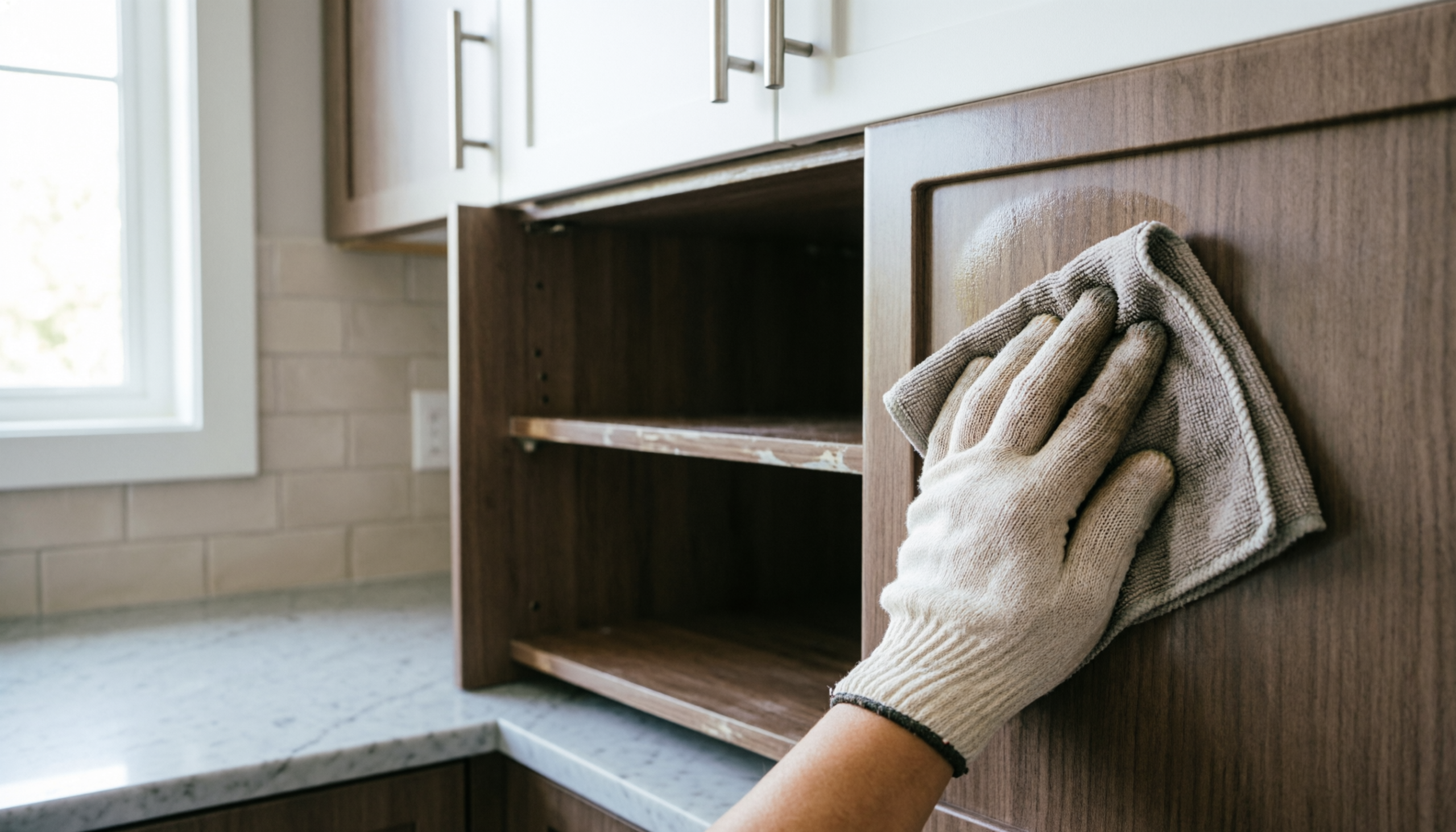
How to Degrease Kitchen Cabinets Without Stripping the Paint
Grease buildup on painted cabinets can be removed safely using the right method and mild cleaners that protect the finish from dulling or peeling.
Harsh scrubbing or strong chemicals often cause more damage than grease itself, especially near cooking zones where residue thickens quickly and sticks over time on surfaces.
The Short Answer
The safest degreaser for painted cabinets is a pH-neutral solution of warm water and a surfactant like dish soap.
For heavy grease, a diluted white vinegar solution can be used, but must be wiped immediately to prevent the acid from softening the paint’s clear coat.
Why You Must Skip the Magic Eraser
Magic Erasers feel gentle in the hand, but the material works like extremely fine sandpaper. Each swipe lightly abrades the surface.
On glossy or satin painted cabinets, that abrasion dulls the finish and leaves uneven patches that catch light differently.
The damage does not show right away. After a few cleanings, areas near handles and edges start to look cloudy or worn. That “clean” spot becomes permanent.
Better approach
- Use a soft microfiber cloth, not foam abrasives
- Apply light pressure only
- Repeat gentle passes instead of forcing grease off in one go
Patience protects the paint. Pressure ruins it.
The “Zone” Strategy: Focus on the Stove-Adjacent Doors
Not all cabinets get equally dirty. The worst buildup sits around:
- Cabinets directly above the stove
- Doors next to the cooker
- Handle areas touched during cooking
Trying to deep clean the entire kitchen in one pass wastes time and increases risk of over-wetting surfaces.
Work in zones instead
- Start with the greasiest cabinets near the stove
- Clean one door at a time
- Rinse cloth frequently to avoid spreading grease
- Move outward to cleaner areas
This keeps grease from smearing across already clean surfaces.
Cloth matters more than cleaner
- Use thick, high-quality microfiber
- Avoid thin cloths that push grease around
- Keep at least two cloths: one for washing, one for drying
Cheap cloths leave streaks and force extra scrubbing, which leads to finish damage.
The “Dry-Behind” Method: Preventing Water Swelling
Cleaning gets all the attention, but drying is what protects the cabinet long term.
Painted wood is sealed, not waterproof. Moisture seeps into:
- Edges
- Seams
- Around hinges
- Under handles
Leftover moisture causes swelling, softening, and eventually peeling.
Proper method
- Wipe with damp (not dripping) cloth
- Immediately follow with a dry microfiber cloth
- Pay extra attention to edges and corners
- Leave cabinet doors open for airflow if needed
Skipping this step leads to more damage than grease ever will.
Practical Cleaning Mix That Works Every Time
For routine grease
- 1 liter warm water
- A few drops of dish soap
For heavier buildup
- Same mix, plus a small splash of white vinegar
- Always wipe dry right after
Avoid strong degreasers, bleach, or ammonia-based products. Those break down paint layers over time, even if results look good at first.
Common Mistakes That Ruin Painted Cabinets
- Scrubbing too hard instead of repeating light passes
- Using abrasive pads or powders
- Letting water sit along edges
- Cleaning everything the same way instead of targeting grease zones
- Skipping the drying step
Each one slowly degrades the finish. Damage builds quietly, then shows all at once.
Bottom Line
Gentle cleaning done consistently beats aggressive cleaning done rarely. Mild soap, soft cloths, and immediate drying keep painted cabinets looking sharp for years.
Grease comes off with time and technique. Paint does not come back once worn down.


