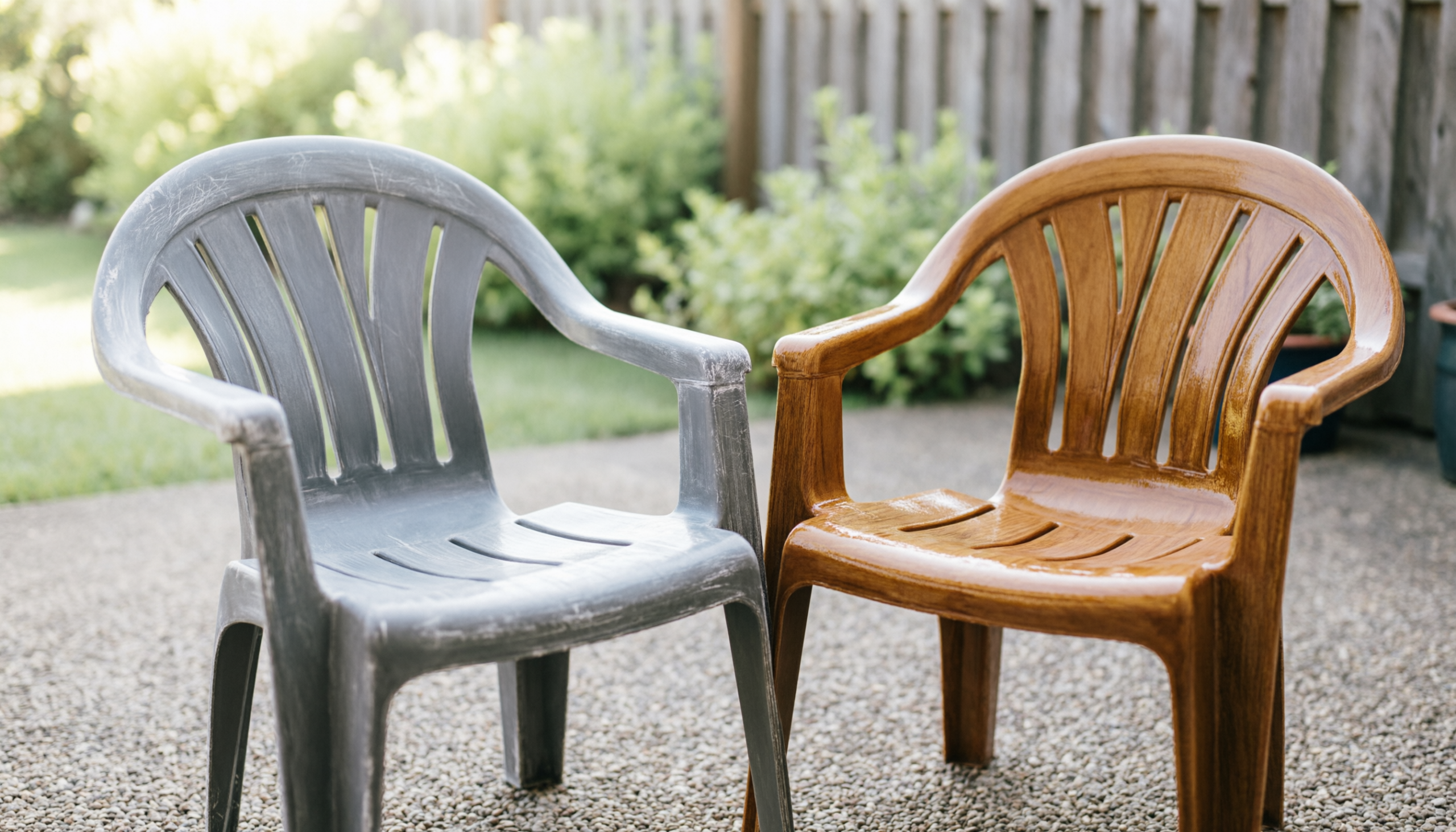
How to Refresh Faded Plastic Outdoor Furniture with Linseed Oil
Sun-faded plastic furniture often looks beyond saving, but the damage usually sits on the surface.
A simple linseed oil treatment can bring back depth, reduce that chalky look, and extend the life of outdoor chairs and tables without expensive replacements or complicated tools.
The Short Answer
UV rays cause oxidation on plastic furniture, stripping surface oils and leaving a chalky white residue. Boiled linseed oil (BLO) soaks into that oxidized layer, restores color depth, and leaves behind a light water-resistant barrier that slows further fading.
Boiled vs. Raw Linseed Oil: Which One Should You Use?
This choice matters more than most people expect.
Boiled Linseed Oil (BLO)
- Dries in 12–24 hours
- Contains drying agents that help it cure faster
- Easier to control during application
- Best for outdoor furniture projects
Raw Linseed Oil
- Can take several days to stay tacky, sometimes longer in humid weather
- Penetrates well but often leaves a sticky surface if overapplied
- Better suited for slow-curing wood treatments, not plastic
Bottom line: Use boiled linseed oil. Raw oil creates more problems than it solves on plastic.
The Application Protocol: Avoiding the “Sticky” Disaster
The biggest mistake is using too much oil. That’s where things go wrong.
What works every time:
1. Clean the surface properly
- Wash with warm water and dish soap
- Scrub lightly to remove dirt and chalky residue
- Let it dry completely
2. Apply a very thin coat
- Use a microfiber applicator pad or soft cloth
- Wipe on, don’t pour
- Spread evenly until the surface looks slightly darker, not wet
3. Wait and wipe off excess
- After 10–15 minutes, go back with a clean cloth
- Remove anything that hasn’t soaked in
4. Let it cure
- Leave furniture in a well-ventilated area
- Avoid touching for at least 24 hours
Rule to remember: If the surface feels greasy, too much oil was used.
Linseed Oil Safety Warning: The Spontaneous Combustion Risk
This part is not optional.
Rags soaked with linseed oil can heat up and catch fire without a spark. It happens when the oil oxidizes and builds heat in a confined space.
Safe disposal steps:
- Lay oily rags flat outside on concrete or hang them to dry fully
- Keep them away from direct sunlight while drying
- Once hardened, dispose of them in a metal container or according to local waste rules
Never leave oily rags crumpled in a pile or inside a bin.
Better Than Oil?
Linseed oil works well, but it has limits.
Where it falls short:
- Needs reapplication every few months in strong sun
- Can attract dust if overapplied
- Doesn’t offer UV protection as strong as purpose-made products
Plastic Restorer Sprays: What changes
Professional plastic restorer sprays are designed for outdoor plastics. They usually:
- Include UV blockers
- Dry faster with less residue
- Last longer between applications
Honest comparison:
- Linseed oil: low cost, easy to find, solid short-term fix
- Restorer sprays: higher cost, better durability, cleaner finish
If furniture gets heavy sun exposure year-round, a restorer spray is the more reliable option. For occasional refresh jobs, linseed oil does the job just fine.
Quick Wrap-Up
Faded plastic furniture rarely needs replacing. A careful linseed oil application can restore color and buy more years of use.
The key is restraint: thin coats, proper wipe-down, and safe rag handling. Skip those steps, and the fix turns messy fast.


