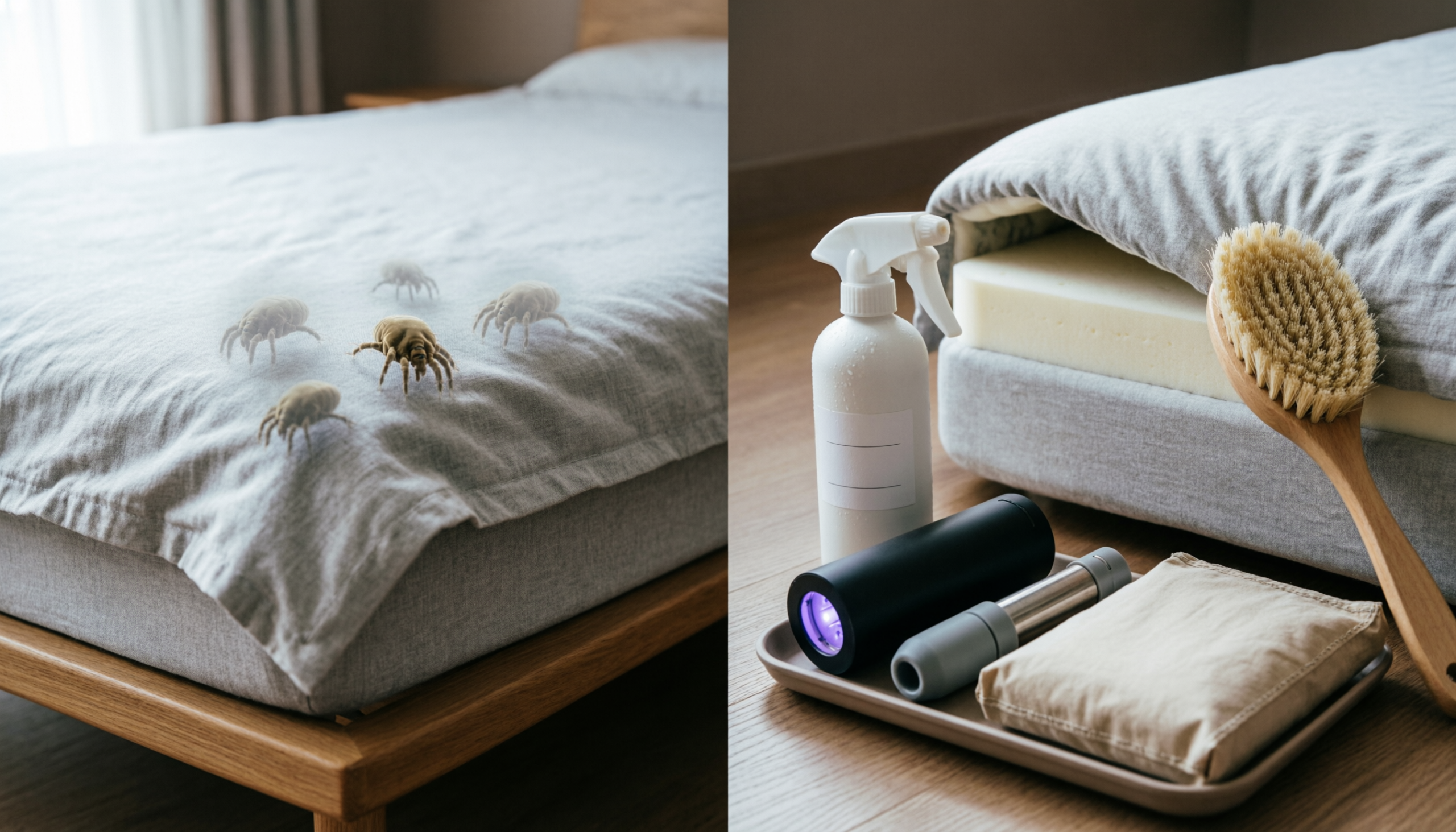
Why Dust Mites Love Your Mattress and How to Kill Them
Dust mites thrive in warm, humid bedding and feed on shed skin, turning mattresses into hidden allergen hotspots.
Effective control requires heat, moisture management, and proper filtration.
This guide explains why infestations happen and shows practical steps that remove mites, clear their waste, and keep beds protected.
The Dust Mite Facts
Question: What kills dust mites instantly?
Answer: Temperatures above 130°F (54°C) or extreme freezing kill dust mites. However, allergens come from waste; removal requires HEPA vacuuming and prevention with a lab-certified mattress protector.
The Humidity Connection: Why Coastal Homes Suffer More
Dust mites need moisture to survive. Relative humidity above 50% creates ideal breeding conditions inside mattresses and pillows.
Coastal climates, rainy seasons, and poorly ventilated rooms keep humidity high even when air feels comfortable.
What actually works:
- Keep indoor humidity between 40–50% using a dehumidifier
- Air bedding daily; pull back covers for at least 30 minutes
- Avoid drying clothes indoors where sleep happens
Common mistake: Running a fan alone. Air movement helps comfort but does not remove moisture.
The “Strip-the-Bed” Protocol
Routine matters more than occasional deep cleaning. A consistent cycle reduces both mites and allergen buildup.
Weekly reset:
- Strip all bedding
- Wash sheets, pillowcases, and blankets at 130°F (54°C) or higher
- Dry thoroughly on high heat
Mattress care:
- Vacuum the mattress slowly using a HEPA filter
- Use a UV mattress vacuum if available; UV helps disrupt mite activity on the surface
- Pay attention to seams and edges where dust collects
Reality check: Cold or warm washes leave mites alive. Quick passes with a vacuum miss embedded debris.
Why “Hypoallergenic” Labels Aren’t Enough
Many fabrics labeled “hypoallergenic” still allow mites and their waste to pass through. The key factor is pore size.
- Dust mite allergens measure roughly 10–40 microns
- Effective barrier fabrics must have pore sizes under 10 microns
What to look for:
- Lab-tested allergen-proof certification
- Tightly woven fabric, not just soft or thick material
Weak assumption: Higher thread count alone equals protection. Thread count without verified pore size does not block allergens reliably.
Choosing a Waterproof/Allergen-Proof Cover
A proper encasement acts as a long-term barrier, trapping existing mites inside and preventing new ones from settling in.
Non-negotiables:
- Fully encases mattress with a secure zipper
- Waterproof layer to block sweat and spills
- Breathable top layer to avoid heat buildup
- Certified allergen barrier (sub-10 micron pores)
Setup tips:
- Install after a full clean cycle
- Leave encasement on continuously; remove only for washing
- Pair with pillow encasements for complete coverage
Where setups fail: Covers that fit loosely allow gaps. Partial protectors leave large sections exposed.
Practical Routine That Holds Up
- Control humidity daily
- Wash bedding weekly at high heat
- Vacuum mattress every 1–2 weeks with HEPA
- Keep encasements in place year-round
Consistency beats occasional deep cleaning. Dust mites return quickly when conditions stay favorable. Tight control of heat, moisture, and barriers keeps allergen levels low and sleep more comfortable.


