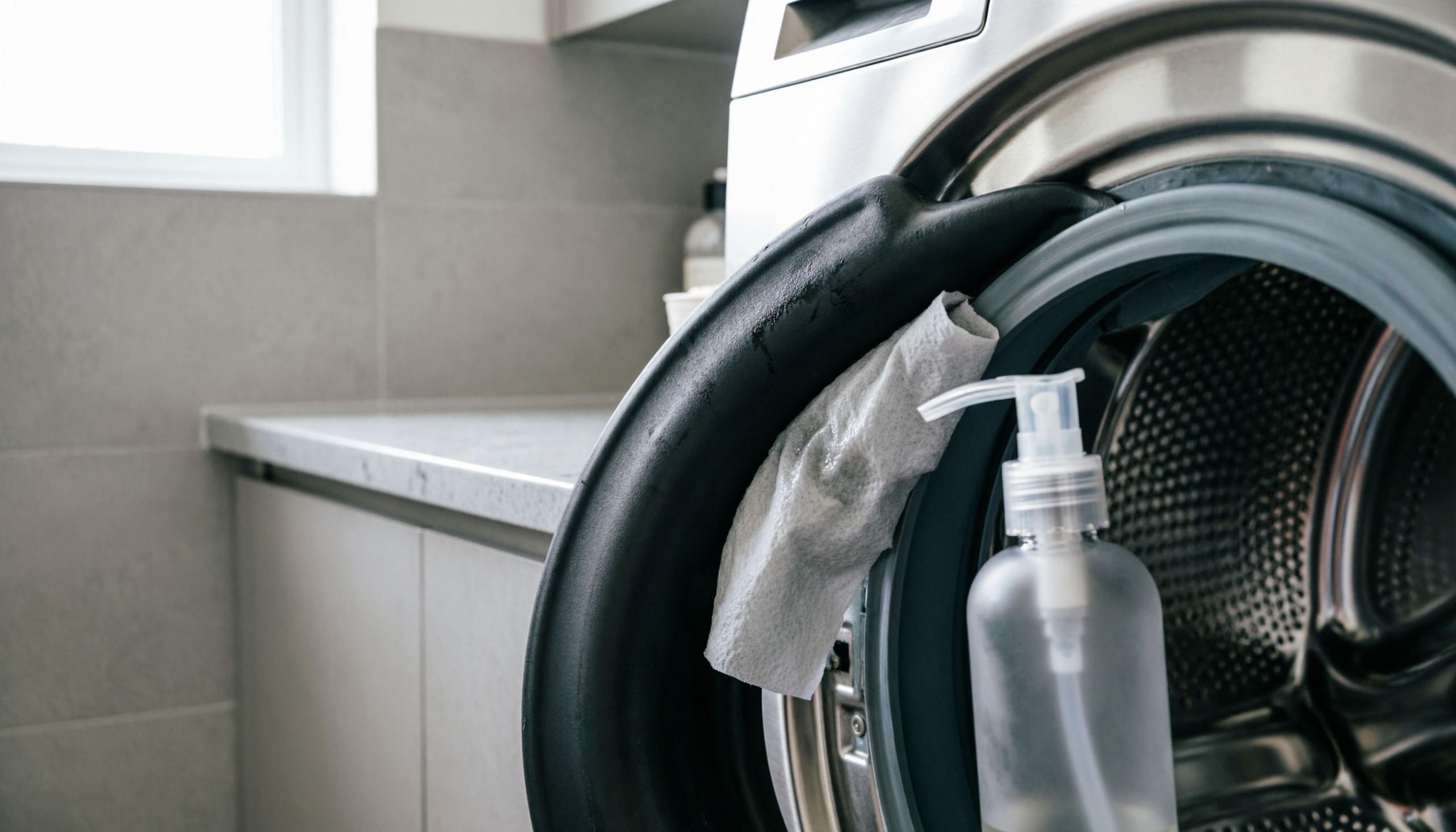
Front-Load Washer Smells? Fix the Gasket Fast
Front-load washers clean clothes well but trap moisture in hidden places. That damp space becomes a perfect home for bacteria and mold.
The sour smell that shows up after a few months usually starts inside the rubber door gasket, where detergent residue and body oils quietly collect.
The Short Answer
Front-load washers smell mainly because of biofilm.
Biofilm is a colony of bacteria, mold, and undissolved detergent that grows in the damp folds of the rubber door gasket (also called the bellows).
These machines use less water, so leftover soap, lint, and body oils stay trapped behind the seal and begin to rot.
The Science of Biofilm: Why It’s Not Just Dirt
A washer odor is rarely simple dirt. The problem usually forms through a combination of moisture, detergent buildup, and body oils.
1. Rubber Gaskets Are Slightly Porous
The thick rubber seal around the door traps water after every cycle. Rubber also has microscopic pores.
Detergent residue and oils sink into those pores and become difficult to rinse away. Over time, bacteria build a slimy layer called biofilm.
2. Cold Water Washes Feed the Problem
Cold cycles save energy but leave behind sebum, the natural oil from skin and clothing fibers. Hot water melts those oils.
Cold water does not. The oils cling to the gasket and create a buffet for mold and bacteria.
3. The “Scrud” Factor
Laundry technicians use the word scrud to describe the waxy buildup created when fabric softener mixes with detergent minerals and body oils.
Scrud sticks to plastic and rubber surfaces. In a front-load washer, it gathers in the gasket folds and detergent drawer. Once bacteria move in, the smell follows.
Diagnostic Checklist: Where Is the Smell Coming From?
Pinpointing the source prevents wasted effort. Run through this quick checklist.
The Gasket Folds
- Pull back the rubber seal.
- Check the 6-o’clock position at the bottom.
- Black slime or grey sludge often hides there.
The Detergent Drawer
- Slide out the tray.
- Inspect the ceiling of the drawer cavity.
- Mold often grows where rinse water sits.
The Drain Pump Filter
- Most front-load machines include a small access door near the bottom.
- Inside sits the coin trap filter.
- Hair, lint, and pocket debris rot here and create strong odors.
The Internal Drum
- A metallic or sour smell that returns quickly may come from behind the drum.
- Spider arm corrosion or trapped detergent buildup can cause this.
The “Gasket Rescue” Protocol (Step-by-Step)
Deep cleaning the gasket removes the odor source instead of masking it.
1. Manual Debris Removal
Wear rubber gloves.
Pull back the folds of the gasket and wipe away sludge using a MR.SIGA Microfiber Cleaning Cloth. Microfiber grabs sticky residue far better than paper towels.
Focus on:
- the bottom fold
- the hidden inner lip of the seal
Expect grey slime. That material feeds mold growth.
2. The Shock Treatment
Run an empty hot cycle using a Affresh Washing Machine Cleaner Tablets or OxiClean Washing Machine Cleaner with Odor Blasters.
These tablets work better than vinegar because they contain surfactants and oxygen cleaners that dissolve waxy scrud. Vinegar mainly removes mineral scale and struggles with greasy residue.
Place the tablet directly in the drum and run the hottest cycle available.
3. Deep Mold Removal
Stubborn black stains on the rubber require targeted treatment.
Apply Sugelary Mold Remover Gel along the gasket folds. Thick gel formulas cling to vertical rubber surfaces and stay in contact long enough to break down mold.
Leave the gel for several hours, then wipe clean with a damp cloth.
4. Pump Flush
This step solves many “mystery smells.”
- Open the small service panel at the bottom front of the washer.
- Pull out the emergency drain hose.
- Drain water into a shallow pan.
- Unscrew the pump filter.
- Remove lint, hair, coins, and debris.
- Rinse the filter and reinstall.
Rotting debris inside the pump often causes the worst odors.
3 Pro-Habits That Prevent the Smell
Small habits stop the problem from returning.
1. The “Door Ajar” Rule
Keep the washer door open about two inches after the final load. Airflow dries the gasket.
A small accessory like the KELIYA Magnetic Washing Machine Door Prop holds the door open without swinging wide.
2. The Dry-Wipe Ritual
After the last load of the day:
- wipe the bottom gasket fold
- remove visible moisture
Thirty seconds of wiping prevents weeks of odor.
4. The HE Detergent Warning
Most households use two to three times the necessary detergent.
Too much soap creates excess residue. Residue feeds mold.
A simple rule:
- small loads: one tablespoon
- normal loads: two tablespoons
More soap does not mean cleaner laundry. It means more buildup.
When to Admit Defeat: Replacing the Gasket
Sometimes cleaning cannot fix the problem.
If mold has pitted the rubber that is tiny black craters in the seal, the material has already degraded. Odor returns because bacteria live inside the damaged rubber.
Replacement becomes the practical fix.
Common replacement options include:
- LG Front Load Washer Door Boot Seal Gasket 4986ER0004F
- Samsung Washer Door Seal DC64‑00802B
- Whirlpool Front Load Washer Door Boot Seal W11106747
Typical cost ranges between $60 and $120 depending on brand and model.
Installation takes patience but saves hundreds compared with replacing the washer.
FAQs
1. Can bleach clean a washer gasket?
Yes. Diluted bleach removes mold effectively. High concentrations used frequently can weaken rubber seals and hoses over time. Occasional use works well; daily use shortens gasket life.
2. Why does a washer smell like rotten eggs?
A sulfur smell usually points to bacteria in the drain pump filter or debris trapped in standing water. Another possibility is a dry plumbing P-trap near the laundry drain.
3. Does vinegar damage front-load washers?
Frequent vinegar use can slowly weaken rubber seals and hoses. Occasional cleaning cycles are usually fine, but daily use may shorten gasket life.
Final Thought
A smelly washer rarely signals a major machine failure.
In most homes the culprit is simple: trapped moisture, excess detergent, and a neglected gasket fold.
Regular wiping, lighter detergent use, and occasional deep cleaning keep the machine fresh for years.


