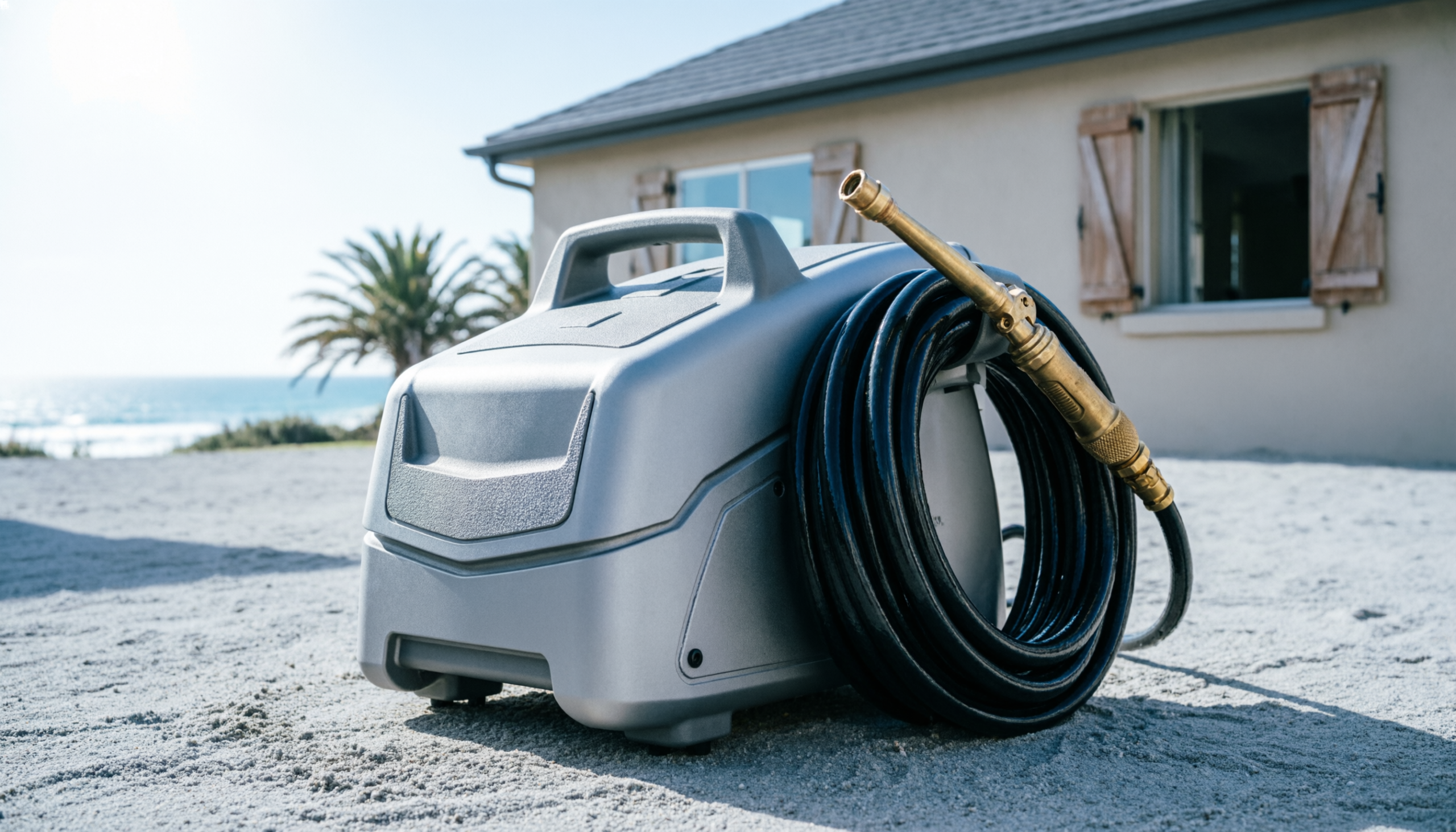
Best High-PSI Pressure Washers for Coastal Salt-Air Removal
Coastal salt does not sit politely on a surface. Salt-laden spray and humid air drive corrosion, and salt residue left behind can keep the damage going on metal, paint, and concrete.
Fresh water rinsing helps, but stubborn film needs enough pressure, enough flow, and the right nozzle pattern to clear seams, corners, and rough surfaces cleanly.
Expert Verdict: Simpson PS4240
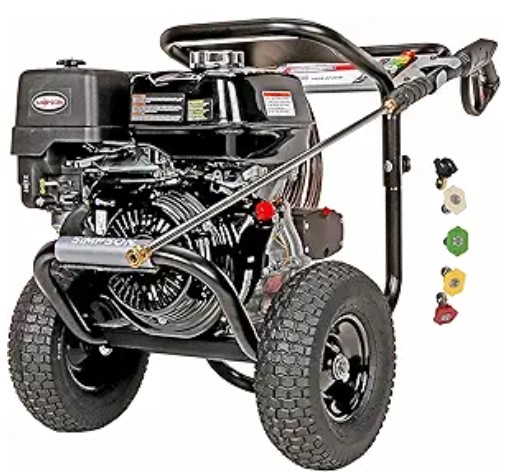
For heavy salt crust on concrete, dock steps, and railings, Simpson PS4240 is the brute-force choice. For a strong but more manageable gas unit, Westinghouse WPX3400 hits a useful middle ground.
For quieter routine rinsing around siding and fences, Westinghouse WPX3400e and WPX3000e make more sense. BILT HARD 4000 PSI is the raw-flow wildcard for larger outdoor cleanups.
Comparison Table
| Product | Best For | Key Spec | Amazon Link |
|---|---|---|---|
| Simpson PS4240 PowerShot | Heavy salt crust on concrete, dock stairs, and metal railings | 4200 PSI, 4.0 GPM, Honda GX390, industrial triplex pump | Amazon |
| Westinghouse WPX3400 Gas | Driveways, siding, fences, and larger rinse jobs | 3400 PSI, 2.6 GPM, onboard soap tank, 5 nozzles | Amazon |
| BILT HARD 4000 PSI Gas | Bigger concrete areas and higher-flow cleaning | 4000 PSI, 4.0 GPM, brass-head triplex axial cam pump, 50′ hose | Amazon |
| Westinghouse WPX3400e Electric | Quieter cleaning for siding, fences, and patios | 3400 max PSI, 2.0 max GPM, brushless motor, 5 nozzles | Amazon |
| Westinghouse WPX3000e Electric | Routine coastal rinsing on decks, furniture, and walls | 3000 max PSI, 1.76 max GPM, induction motor, soap tank, 5 nozzles | Amazon |
Why “Regular” Soap Leaves Salt Behind
Regular soap lifts surface dirt, but coastal salt can hide in crevices, pits, joints, and porous material.
If the rinse does not fully flush those spots, salt remains active and keeps pulling moisture back to the surface.
That is why a simple wash often looks better for a day, then leaves dullness, streaking, or corrosion risk behind.
Fresh-water rinsing matters because salt residue left on metal keeps accelerating rust and blistering.
Best High-PSI Pressure Washers for Coastal Salt-Air Removal
1: Simpson PS4240 PowerShot (the Heavyweight Champion)
Why this model earned the top spot: The PS4240 pairs 4200 PSI with 4.0 GPM, a Honda GX390 engine, a maintenance-free AAA industrial triplex plunger pump, thermal relief, and a welded steel frame with corrosion resistance.
That is the kind of build that makes sense for larger coastal properties where concrete, stone, and metal fixtures collect a lot of salt film.
Pros: Serious cleaning force, repair-friendly engine and pump setup, 50-foot kink-resistant hose, and hardware that feels built for long-term use rather than one season of casual rinsing.
Cons: High-pressure spray can injure or damage surfaces at close range.
Real-world rinse result: Best on dock steps, concrete pads, masonry, rust-specked railings, and thick salt crust. Less friendly for fragile siding unless a wider fan tip stays in play.
2: Westinghouse WPX3400 Gas (the Value Pick)
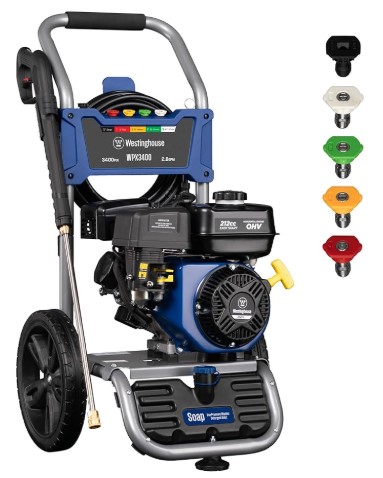
Why this model earned the middle slot: The WPX3400 brings 3400 PSI and 2.6 GPM, a gas engine, onboard soap tank, 5 quick-connect nozzles, and compatibility with surface cleaners and foam cannons.
Pros: Strong cleaning power without jumping into full commercial territory, useful hose length, good accessory support, and a setup that fits driveways, fences, walls, and patio furniture.
Cons: Gas upkeep adds noise, fuel, and maintenance. Not the best choice for small patios where a quieter electric unit makes more sense.
Real-world rinse result: A smart everyday pick for coastal homes that need repeated rinse-downs after windy, salty days. Strong enough for grime and salt film, yet not so extreme that the machine feels oversized for normal weekend work.
3: BILT HARD 4000 PSI Gas (the Raw-Flow Workhorse)
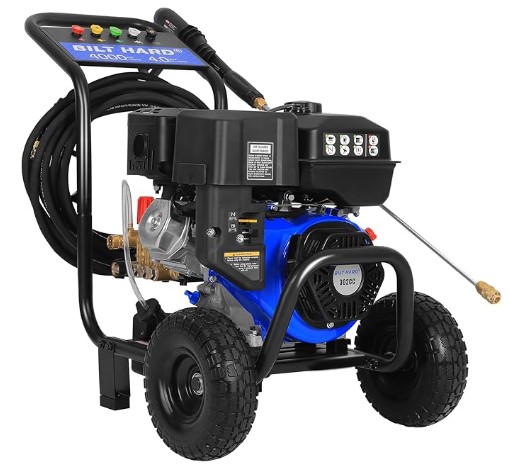
Why this model made the cut: The BILT HARD unit delivers 4000 PSI and 4.0 GPM and uses a maintenance-free triplex brass head axial cam pump.
The 50-foot hose helps around larger driveways, long walkways, and oversized outdoor spaces where hose reach matters as much as pressure.
Pros:
Strong flow, long hose, and pump hardware that looks built for heavier cleaning sessions.
On big hardscapes, that extra water volume helps move salt residue instead of just chipping at the top layer.
Cons:
The power level needs respect on painted surfaces and wood.
Real-world rinse result: A solid match for large concrete zones, exterior stair runs, and salt-heavy areas where a deeper flush is the goal. Best when raw output matters more than compact storage.
4: Westinghouse WPX3400e Electric (the Quiet Keeper)
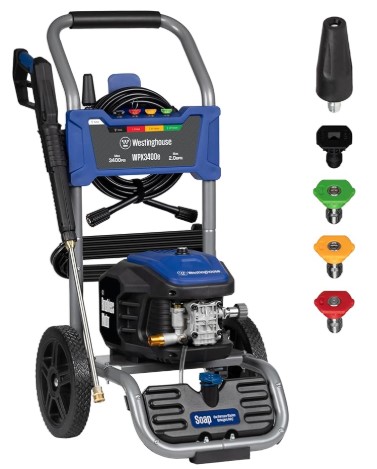
Why this model earned a spot: The WPX3400e delivers 3400 max PSI and 2.0 max GPM with a brushless motor, onboard soap tank, 5 nozzles, and 3-year coverage.
Pros: High electric pressure, easier daily use, less hassle than gas, and enough punch for siding, fences, railings, garage floors, and patio furniture.
Cons: Less raw muscle than the top gas machines. Deep concrete staining still favors the heavier gas units.
Real-world rinse result: A practical choice for homes that need frequent salt rinses rather than occasional heavy blasting. The brushless motor and simpler operation make this model easier to keep on hand.
5: Westinghouse WPX3000e Electric (the Safer Everyday Pick)
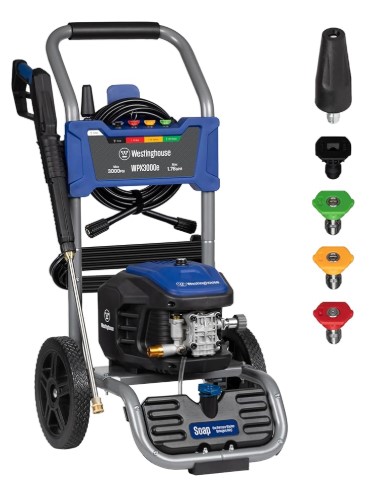
Why this model rounded out the list: The WPX3000e offers 3000 max PSI, 1.76 max GPM, an induction motor, 5 nozzles, and a soap tank.
Pros: Good balance of power and control, easier storage than a gas unit, and enough pressure for decks, sidewalks, fences, garage floors, exterior walls, cars, and patio furniture.
Cons: Not the best answer for thick, set-in salt crust on large concrete areas. More of a reliable rinse-and-maintain machine than a demolition tool.
Real-world rinse result: The most sensible option for regular coastal upkeep where salt film shows up again and again. Less drama, less noise, and enough cleaning force for steady maintenance.
What to Look for on the Label
PSI and GPM matter together. PSI gives the punch, but GPM helps wash the salt away.
For coastal cleanup, 3000 PSI and up with decent flow gives a better result than a flashy PSI number with weak water volume. The strongest picks here pair high pressure with 2.6 to 4.0 GPM.
Pump quality matters more than marketing hype. Triplex pumps and maintenance-free axial cam pumps show up on the more serious gas units in this list, while the electric models lean on brushless or induction motors with automatic stop systems.
That is the difference between a machine built for repeat use and a machine built to sit in a shed.
Hose length saves time. A 25-foot hose handles small jobs, but a 50-foot hose helps around docks, boat ramps, broad driveways, and long fence runs. Less dragging means less frustration.
Nozzle variety matters. A 0°, 15°, 25°, 40°, soap, or turbo set gives room to shift from hard concrete to safer rinse work on siding and trim.
Broad fan tips suit more surfaces. Tight tips belong on stubborn concrete only.
FAQs
1. Can a pressure washer remove coastal salt residue?
Yes. Fresh-water rinsing helps clear loose salt film, and repeated rinsing reduces the salt left behind in seams, pits, and crevices where corrosion starts.
2. Gas or electric for a coastal home?
Gas makes more sense for large concrete areas and heavy salt buildup. Electric makes more sense for routine rinsing, quieter use, and easier storage.
The product pages here show that split clearly, with gas units reaching 4000 to 4200 PSI and electric units staying easier to handle around 3000 to 3400 PSI.
3. Is 4000 PSI always better than 3000 PSI?
No. More pressure is not always the better choice. High-pressure spray can damage surfaces at close range, so the right tip and the right distance matter as much as the number on the box.