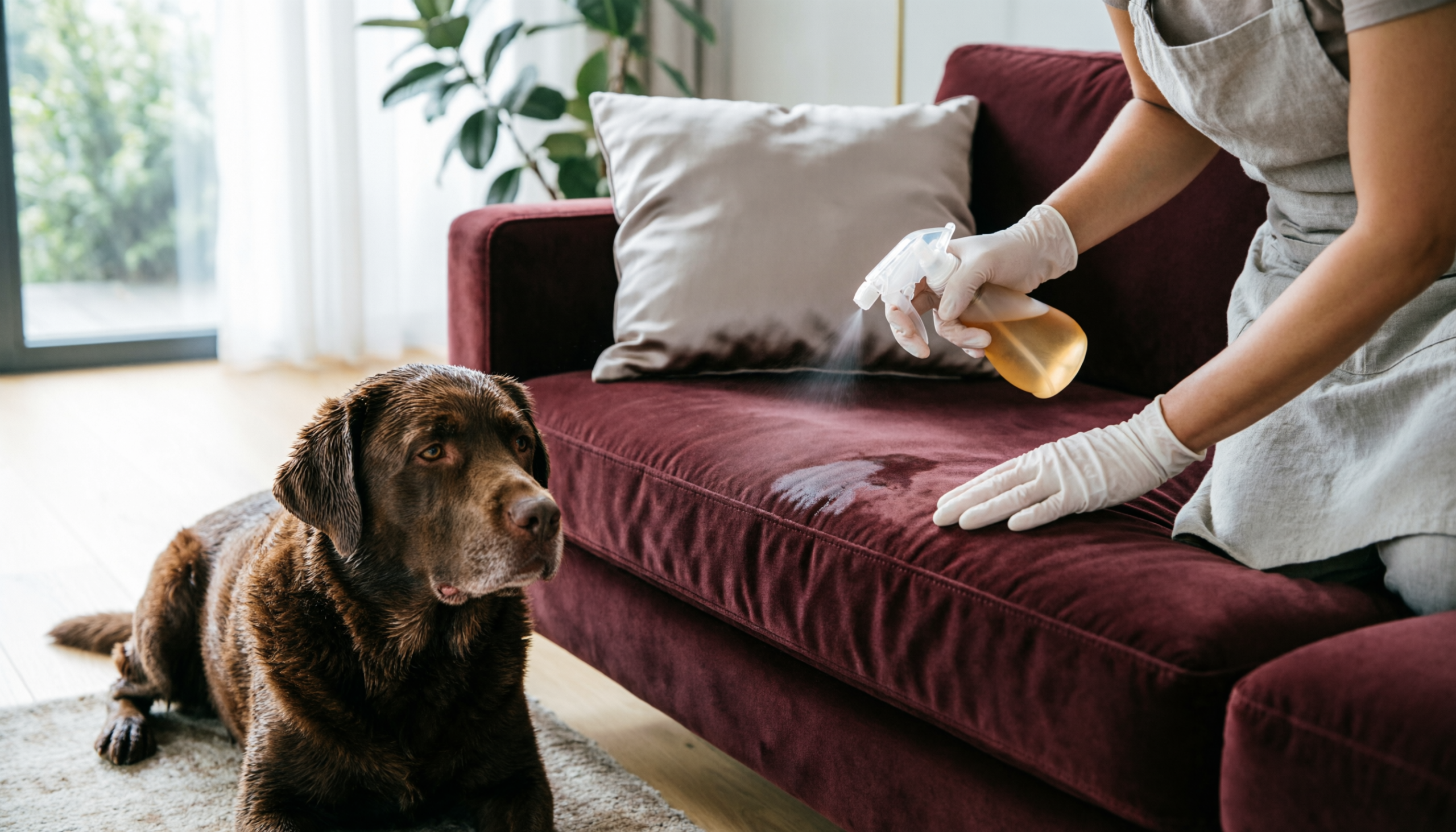
How to Deep-Clean Wet Dog Smell from Velvet & Silk Upholstery
Wet dog odor on velvet or silk upholstery spreads fast and sinks deep into delicate fibers.
Quick action matters because moisture, oils, and bacteria bond to luxury fabrics quickly.
Careful vacuuming, gentle enzymatic cleaners, and controlled dry steam remove odor safely without flattening velvet pile or staining silk.
The Quick-Answer
Question: How does dog smell come out of silk upholstery?
Answer: Never saturate luxury fabrics with water. Apply a pH-neutral, silk-safe enzymatic spray onto a microfiber cloth, then blot the affected area.
Follow with dry steam held about six inches away to neutralize odor-causing bacteria while protecting delicate fibers from soaking.
Why Luxury Fabrics Trap Odors
Wet dog odor is not simply surface smell. Natural fibers hold scent molecules deep inside their structure.
Silk behaves like a sponge at the microscopic level.
Protein fibers in silk absorb moisture and oils easily. Dog fur carries skin oils and bacteria, which sink into those fibers and stay trapped if moisture lingers.
Velvet traps odor differently.
Velvet contains thousands of upright fibers called a pile. That soft texture creates tiny pockets that hold moisture and scent.
When pet odor settles there, air circulation becomes limited and bacteria multiply.
The result: odor stays locked in even after the surface dries.
Fast but gentle cleaning breaks that cycle before odor becomes permanent.
Cleaners That Damage Velvet and Silk
Many common odor fixes create worse problems on luxury upholstery.
1. Fabric sprays designed for synthetic furniture
Heavy fragrance sprays mask odor briefly but leave residue. That residue stiffens velvet pile and dulls silk’s natural sheen.
2. Vinegar solutions
Acidic cleaners weaken silk fibers and can leave watermark rings. Velvet also reacts poorly because vinegar changes the fabric’s natural pH balance.
3. Baking soda treatments
Powder seems harmless but behaves like fine sand on delicate fabrics. Velvet pile becomes flattened and silk threads may fray during brushing.
4. Heavy water soaking
Moisture spreads odor deeper into padding and backing materials, making removal far harder.
Luxury upholstery responds best to controlled moisture and targeted enzyme cleaners.
Top Silk-Safe Odor Eliminators
High-quality enzyme cleaners break down organic odor molecules rather than covering them with fragrance.
| Product Name | pH Level | Best For | Amazon Link |
|---|---|---|---|
| Biokleen Bac-Out Enzyme Cleaner | Neutral | Pet odor in natural fabrics | Amazon |
| Rocco & Roxie Professional Strength | Neutral | Deep organic odor removal | Amazon |
| Puracy Natural Enzyme Cleaner | Neutral | Light odors on silk upholstery | Amazon |
Enzyme cleaners work slowly but safely. A gentle formula protects fibers while targeting odor at the source.
How to Deep-Clean Wet Dog Smell from Velvet & Silk Upholstery
The Step-by-Step “Dry-Cleaning” Protocol
Luxury upholstery cleaning relies on patience and light pressure.
Step 1: Careful Vacuuming
Start with a vacuum fitted with a HEPA filter and upholstery attachment. Suction removes pet hair, skin flakes, and dust that hold odor.
Use slow strokes and minimal pressure. Velvet pile should remain upright rather than crushed.
Cleaning the surface first prevents odor particles from spreading during treatment.
Step 2: Targeted Enzyme Application
Lightly mist a microfiber cloth with enzyme cleaner. Avoid spraying directly onto the fabric.
Blot the odor area gently. The goal is moisture control, not saturation.
Enzymes break down proteins found in pet saliva, skin oils, and bacteria. Allow at least fifteen minutes for the cleaner to work before touching the area again.
Step 3: Gentle Fabric Grooming
Once dry, restore velvet pile using a boar-bristle upholstery brush.
Brush in one direction using light strokes. This lifts crushed fibers and improves airflow through the fabric.
Better airflow prevents lingering odor from staying trapped in the pile.
Step 4: Dry-Steam Sanitizing
A handheld steamer held six inches away from the fabric provides dry steam that kills odor-causing bacteria.
Short passes work best. Steam should never saturate the upholstery.
Heat breaks down remaining odor compounds while preserving silk structure and velvet texture.
FAQs
1. How often should velvet upholstery be cleaned?
Light vacuuming once a week prevents oils and pet hair from settling deep into the pile. Deep odor treatment usually becomes necessary only after accidents or heavy pet contact.
2. Is baking soda safe on velvet or silk?
No. Baking soda particles act like fine grit and can damage delicate fibers. Velvet pile may flatten permanently, and silk threads can weaken.
3. Can steam cleaning replace enzyme cleaners?
Steam kills bacteria but does not break down organic residue such as oils or pet saliva. Enzymes remove the source of odor, while steam acts as a finishing step.
4. What if odor remains after cleaning?
Persistent odor usually indicates contamination inside cushion filling. Professional upholstery cleaning may be necessary to treat internal padding safely.
Final Thoughts
Pet odors feel alarming on luxury upholstery, especially velvet or silk pieces that cost thousands. Quick but gentle care prevents permanent damage.
Controlled vacuuming, silk-safe enzyme cleaners, careful brushing, and dry steam remove odor while protecting delicate fibers.
Consistent upkeep keeps velvet soft, silk bright, and upholstery fresh even in homes with active pets.


