5 Ways to Protect Outdoor Furniture from UV Damage
Sun damage creeps in quietly, then shows up all at once. Colors dull, plastic turns chalky, wood dries out, and fabrics lose strength.
Outdoor furniture isn’t cheap, and replacing it every few seasons makes no sense when a few smart habits can stretch its life for years.
This guide focuses on prevention that actually works in real homes, not showroom setups.
The “Sun as an Acid” Reality Check
Think of sunlight as a slow chemical attack.
UV rays trigger photodegradation, which breaks down molecular bonds in materials:
- Plastic becomes brittle and fades
- Fabric fibers weaken and lose dye
- Wood dries, cracks, and greys
- Metal coatings oxidize and peel
Heat makes it worse, but UV is the real culprit. Once damage starts, no cleaner or polish fully reverses it. Protection has to come first.
The #1 Defense: 303 Marine UV Protectant
This is one of the few products that consistently earns repeat use in real households.
What it does well
- Blocks UV rays before they break down surfaces
- Restores a low-sheen, non-greasy finish
- Works on plastic, vinyl, rubber, and some fabrics
Where it earns its keep
- Plastic chairs and tables that fade fast
- Outdoor cushions with synthetic covers
- Vinyl straps and trims
Where it falls short
- Needs reapplication every 3–5 weeks in strong sun
- Not a fix for already brittle or cracked materials
How to use it properly
- Clean the surface first. Dirt blocks absorption.
- Apply a light, even coat.
- Wipe off excess after a few minutes.
Skipping that last step leaves a sticky surface that attracts dust.
Bottom line: This works best as a habit, not a one-time fix.
Why “Solution-Dyed” Acrylic Is the Only Coastal Choice
Not all outdoor fabrics are built the same.
The key difference
- Solution-dyed acrylic: Color added before fibers are formed
- Surface-dyed fabric: Color applied after weaving
That difference matters more than most realize.
What happens in the sun
- Surface-dyed fabric fades because UV attacks the outer layer
- Solution-dyed acrylic holds color because pigment runs through the entire fiber
What this means in practice
- Cushions last years longer
- Colors stay consistent, even in direct sun
- Less money spent replacing covers
Yes, it costs more upfront. Cheap fabric replaced every year ends up costing more than durable fabric replaced every five.
Strategic Placement: Using Umbrellas & Shade Sails
Not every piece of furniture needs full sun exposure all day.
Simple placement rules
- Keep seating out of direct afternoon sun
- Rotate furniture every few weeks to spread exposure
- Use shade where fading shows up first
What actually works
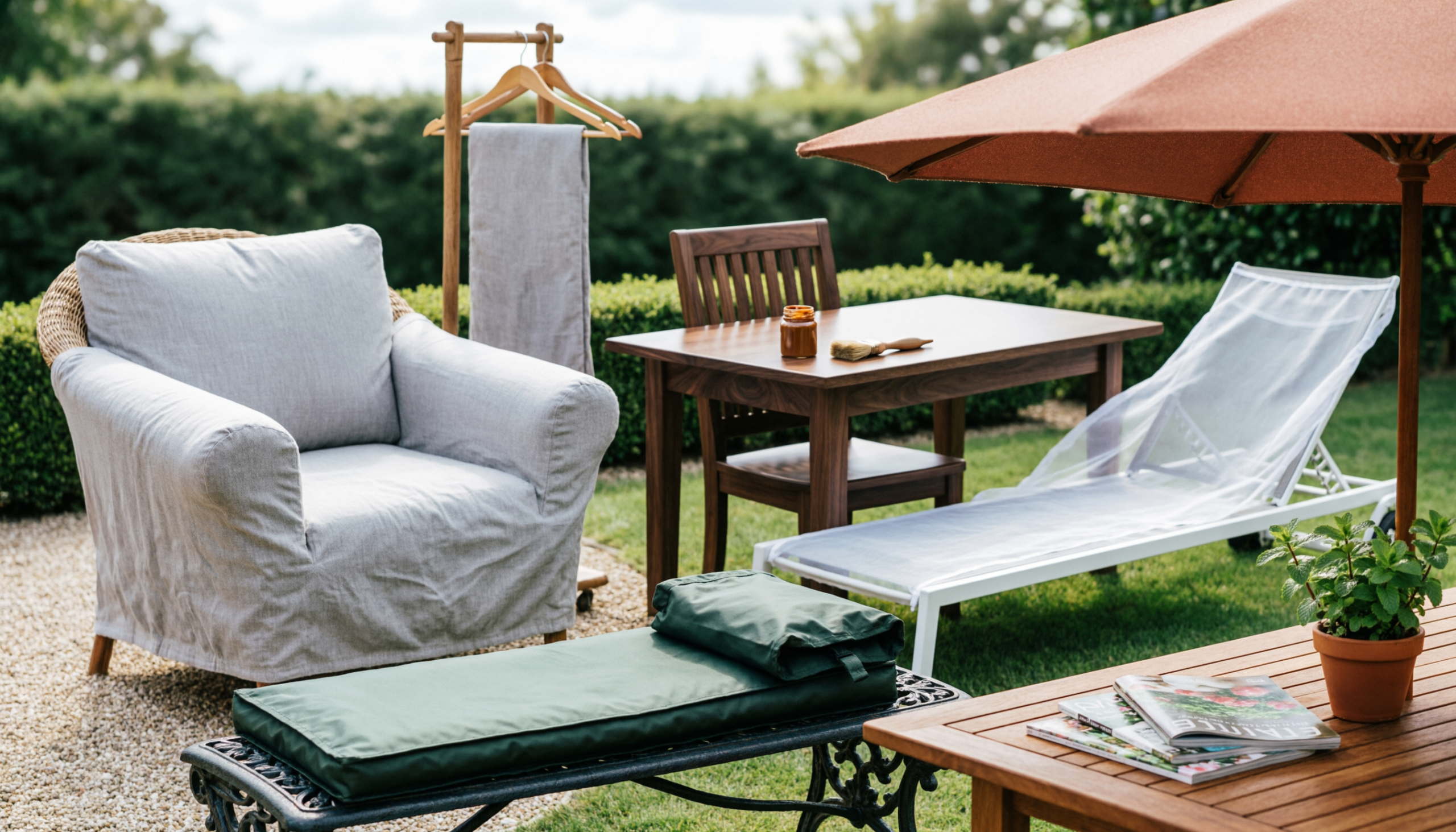
- High-UV-rated patio umbrellas for dining and lounge areas
- Shade sails for larger spaces or fixed setups
Common mistake
Buying shade based on size alone. UV rating matters more. A large umbrella with weak fabric still lets damage through.
Treat shade as protection, not decoration.
The Yearly Wax: Protecting Wood and Metal
Wood and metal need a different approach than plastic and fabric.
For wood (especially teak)
- Use teak oil or a protective sealant once or twice a year
- Prevents drying, cracking, and that dull grey look
For metal
- Apply a protective wax coating
- Helps prevent oxidation and peeling paint
What people get wrong
- Waiting until the surface looks damaged
- Applying oil on dirty wood, which traps grime
Clean first. Always.
A Simple Protection Routine That Actually Works
No need for a complicated system. This covers most situations:
- Monthly: Apply UV protectant to plastic and vinyl
- Seasonally: Re-oil wood and wax metal
- Weekly habit: Adjust or use shade during peak sun
- When buying: Choose solution-dyed fabrics
That’s it. Consistency beats expensive fixes every time.
Final Take
Sun damage doesn’t need dramatic solutions. It needs attention before things start to fail. Most outdoor furniture wears out early due to neglect, not age.
Protect early, reapply often, and choose better materials from the start. That’s what keeps furniture usable long after the first season.