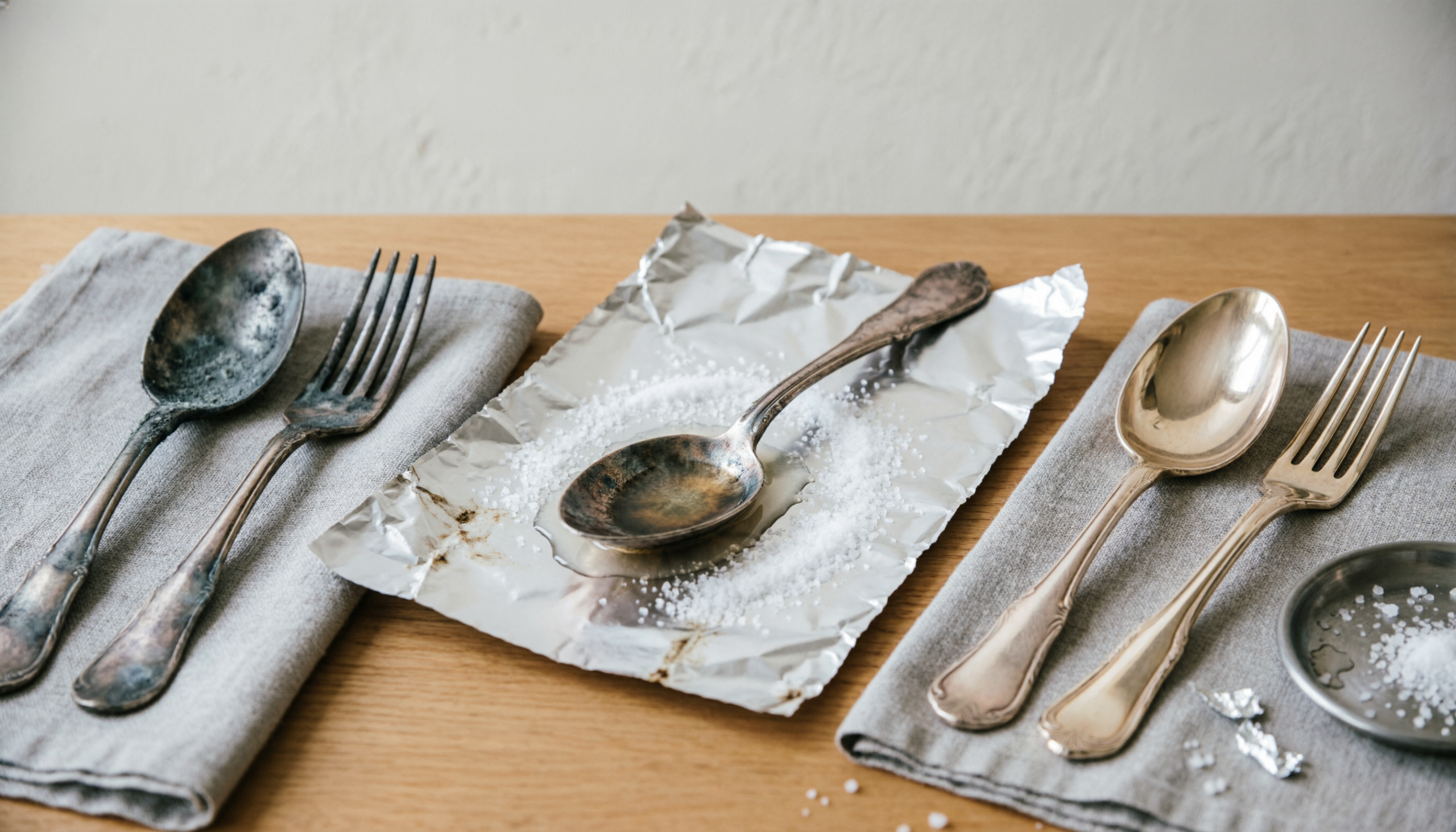
Restoring Tarnished Silver: The Aluminum Foil and Salt Method
A dull, grey film on silver isn’t dirt, and scrubbing only wears the surface down. The real fix comes from chemistry, not elbow grease.
A simple foil-and-salt bath reverses tarnish at the molecular level, lifting it off without damage.
The Chemistry Table
| Ingredient | Role in Process |
|---|---|
| Baking Soda | Electrolyte |
| Aluminum Foil | Sacrificial Anode |
| Boiling Water | Catalyst |
The Electrochemical Reaction: Why Tarnish “Jumps” to the Foil
Tarnish forms when silver reacts with sulfur in the air, creating silver sulfide. That black layer isn’t sitting on top, it’s bonded to the metal.
Here’s the part most cleaning advice skips. Aluminum has a stronger pull for sulfur than silver does. When silver touches aluminum in a warm electrolyte solution, a small electrical current forms.
The sulfur leaves the silver and attaches to the aluminum instead. No abrasion. No polishing grit. The tarnish doesn’t get scrubbed off, it relocates.
That’s why pieces come out clean without losing detail, even on intricate patterns that cloths can’t reach.
Step-by-Step Guide to the “Silver Bath”
This works best in a kitchen sink or a deep bowl.
1. Line the container
Lay aluminum foil shiny side up. Make sure it covers the base fully.
2. Add baking soda
Sprinkle a generous layer over the foil. About 1 tablespoon per liter of water works well.
3. Place the silver items
Set each piece directly on the foil. Contact matters. No contact, no reaction.
4. Pour in boiling water
Cover everything completely. The heat speeds up the reaction.
5. Wait and watch
A faint smell of sulfur may appear. That’s normal. Within a few minutes, tarnish fades.
6. Rinse and dry
Use clean water, then dry immediately with a soft cloth to prevent water spots.
Practical tip:
Crowding slows things down. If pieces overlap, some spots stay dull. Work in batches for better results.
Warning: When NOT to Use This Method
This method is effective, but not universal. Misuse can do more harm than good.
Avoid it for:
- Antique silver with intentional patina
Darkened areas are often part of the design. This process strips that contrast, leaving pieces flat and lifeless. - Silver-plated items with thin coating
Repeated treatments can wear down the plating over time. A gentle polishing cloth is safer here. - Items with glued stones or mixed materials
Heat and moisture can loosen adhesives or damage delicate parts.
If unsure, test a small, hidden area first. That single step prevents costly mistakes.
Long-Term Protection
Cleaning once is easy. Keeping silver from tarnishing again takes a bit of planning.
Anti-tarnish storage bags
These reduce exposure to sulfur in the air. Ideal for rarely used pieces.
Silver polishing cloths
Useful for quick touch-ups between deep cleans. Choose one designed specifically for silver, not general metal.
Practical habit:
Store silver dry, and avoid rubber bands or newspaper nearby. Both release sulfur compounds that speed up tarnishing.
A final reality check
Frequent polishing wears silver down over time. The foil method avoids that, but it’s still best used when needed, not as routine maintenance. Clean gently, store properly, and most pieces stay bright with minimal effort.


