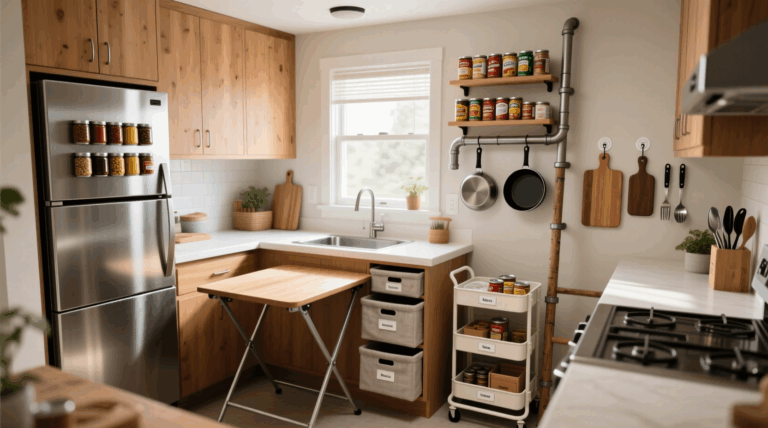
Minimalist Home Ideas That Actually Work
Minimalist home ideas that actually work focus on simple choices that reduce clutter and support daily life.
This guide shares practical minimalist home ideas for real family homes, with storage, layout, and routines that hold up to kids, pets, and busy days.
Minimalist Home Ideas That Actually Work
1. Use Open Wood Shelving
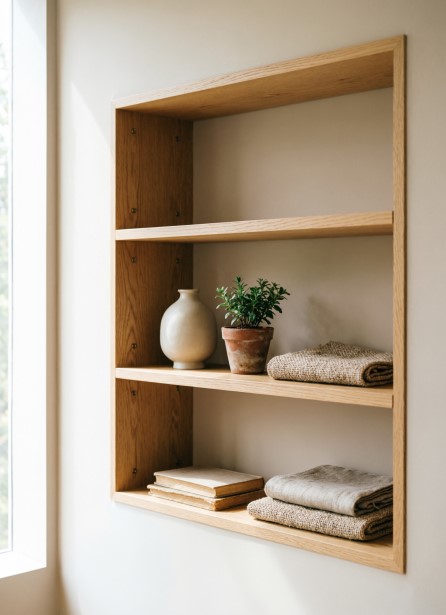
Photo by editorial staff
Open wood shelving replaces bulky cabinets to keep daily dishes visible and limited in kitchens.
Pale oak boards mounted on simple brackets encourage fewer plates and mugs.
White ceramics against warm wood create calm contrast.
Spacing shelves generously prevents clutter creep while keeping countertops clear for real cooking and easy wiping.
2. Install Slim Wall Rail Systems
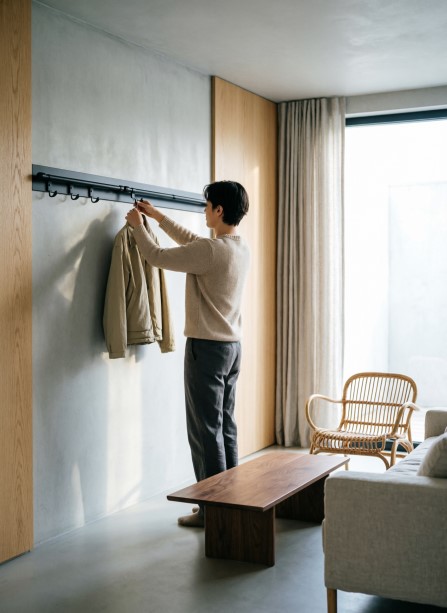
Photo by editorial staff
Slim wall rail systems organize everyday tools while freeing counters and floors throughout utility spaces.
Brushed steel rails hold hooks and narrow bins in a straight line.
Black or silver finishes read clean against white walls.
Frequently used items stay reachable, while visual order reduces overbuying and misplaced supplies.
3. Add Bamboo Drawer Dividers
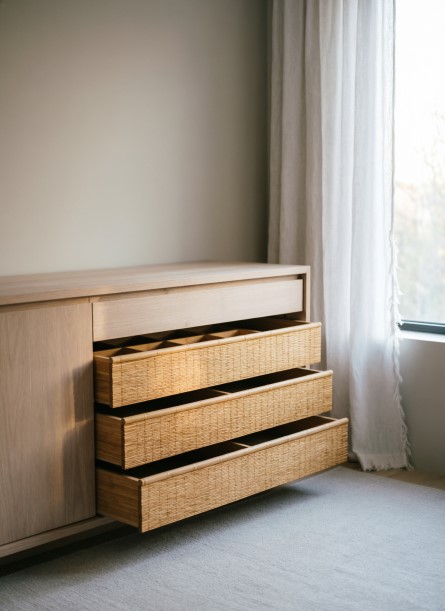
Photo by editorial staff
Bamboo drawer dividers organize utensils and linens into defined sections that prevent messy piles.
Light wood dividers fit snugly inside shallow drawers.
Each item gains a clear home, reducing visual noise during daily routines.
Smooth bamboo surfaces feel warm, not fussy, and support quick resets after busy meals.
4. Choose Closed Linen Storage Baskets
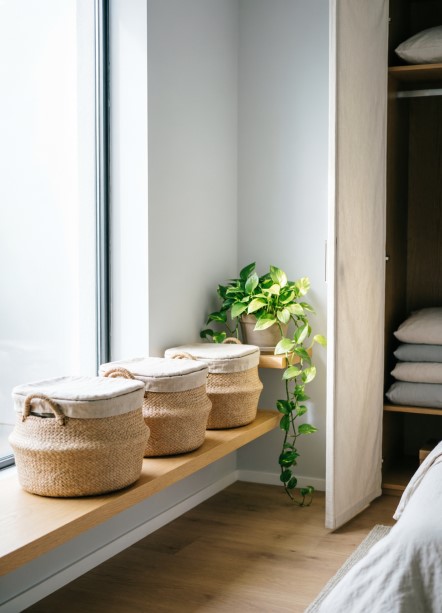
Photo by editorial staff
Closed linen storage baskets conceal necessary clutter while maintaining simple surfaces in living areas.
Woven cotton or canvas baskets slide under benches or shelves.
Soft neutral tones blend into rooms without visual interruption.
Lids keep cords, papers, and toys out of sight while preserving easy access.
5. Mount a Wooden Pegboard Wall
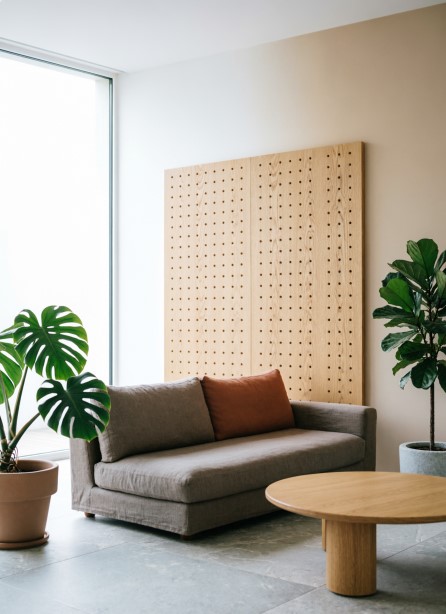
Photo by editorial staff
A wooden pegboard wall organizes tools and accessories using vertical space instead of furniture bulk.
Natural birch panels mounted near work zones hold pegs, shelves, and cups.
Spacing creates breathing room between objects.
The grid layout keeps categories clear and prevents piles from forming on desks or floors.
6. Use Rolling Under-Bed Bins
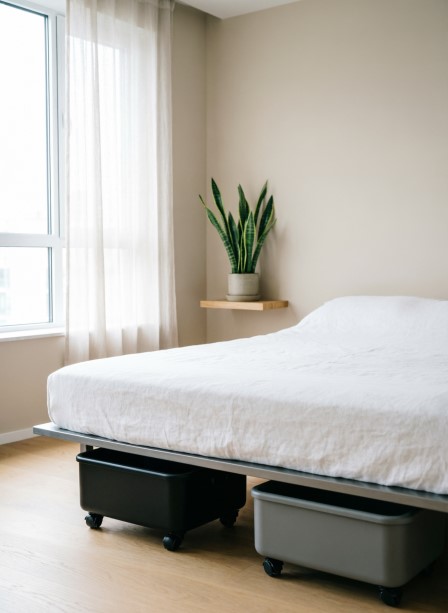
Photo by editorial staff
Rolling under-bed bins store off-season clothing while keeping bedroom floors visually open.
Low-profile bins in matte white or clear plastic glide smoothly on wheels.
Flat lids maintain a clean line beneath bed frames.
Access remains simple without stacking boxes or filling closets beyond capacity.
7. File Papers in Vertical Racks
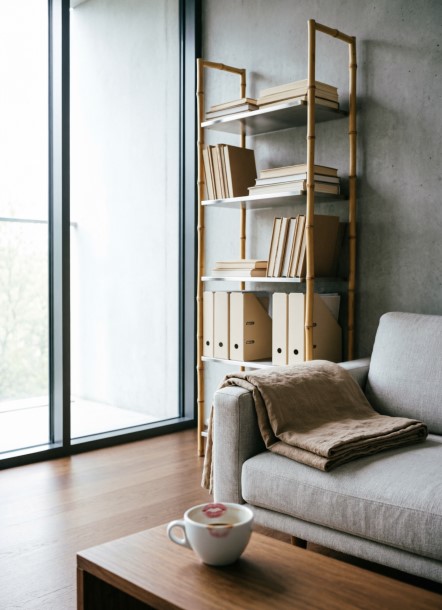
Photo by editorial staff
Vertical paper racks control mail and documents by limiting horizontal spread on desks.
Slim metal racks in black or white stand upright against walls. Each slot holds one category only.
The vertical orientation signals boundaries and keeps surfaces readable, supporting focused work without visual overload.
8. Replace Tables With Floating Nightstands
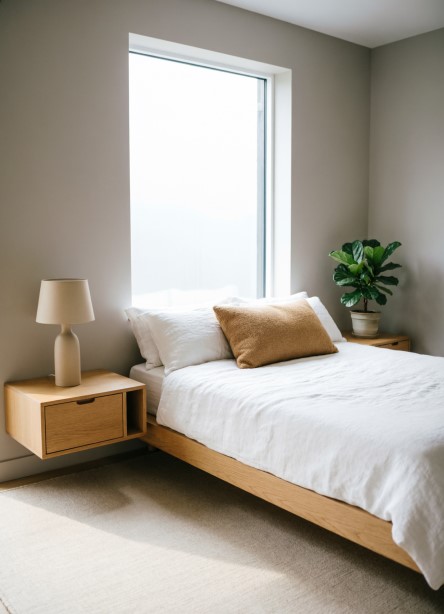
Photo by editorial staff
Floating nightstands replace bulky bedside tables to open floor space around beds.
Wall-mounted wood boxes hold books and lamps without legs.
Natural finishes pair well with white bedding.
Clear floor lines make small bedrooms feel calmer and easier to clean, reinforcing nightly order.
9. Define Zones With Neutral Paint
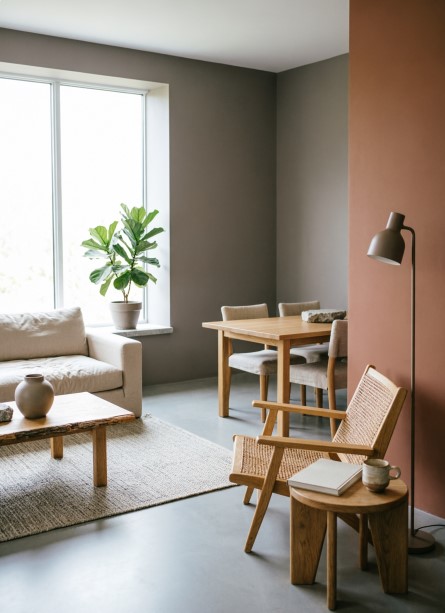
Photo by editorial staff
Neutral paint zoning separates functions without adding furniture or décor layers.
Soft beige or warm gray blocks mark work, rest, or storage areas.
Clean edges and matte finishes reduce glare.
Visual boundaries guide habits naturally, keeping each zone purposeful and preventing objects from drifting.
FAQs
1. Do minimalist home ideas work in busy households?
Yes, minimalist home ideas work in busy households when storage supports daily habits.
Clear limits and visible categories reduce cleanup time. Simple systems encourage consistent use.
2. What materials suit practical minimalist organization best?
Natural wood, metal, bamboo, and fabric suit practical minimalist organization best.
These materials age well and avoid visual heaviness. Simple finishes keep focus on function.
3. How does minimalist organization stay realistic long term?
Minimalist organization stays realistic long term through defined limits and easy resets.
Systems that match routines last longer. Visual clarity discourages unnecessary accumulation.
To wrap it up
Minimalist Home Ideas focus on limits, clarity, and daily ease rather than empty rooms.
Each idea relies on simple materials and clear placement.
Real homes stay functional and calm through small, consistent choices.
Read related organization posts for room-specific solutions and realistic routines.