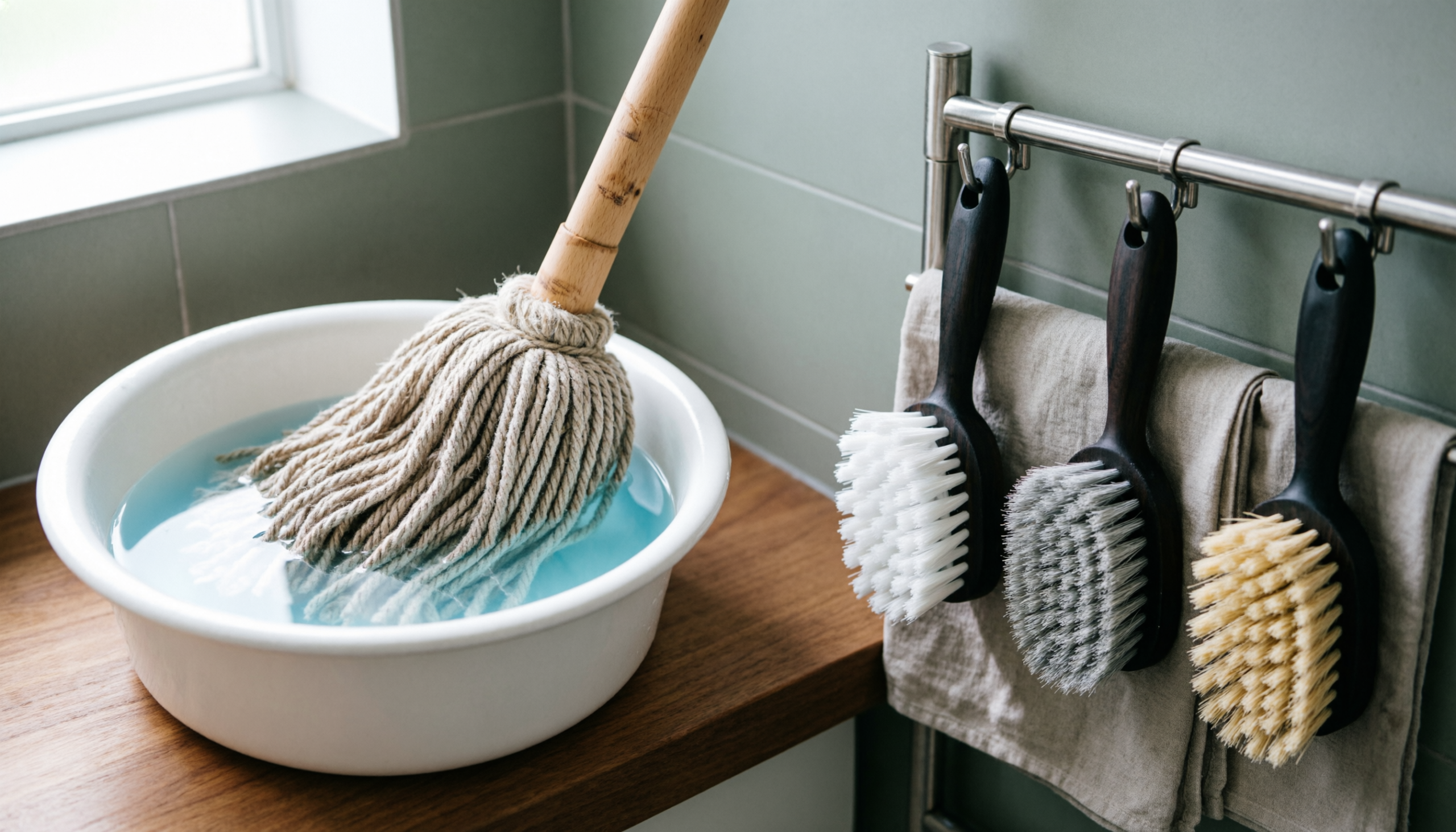
How to Clean Your Cleaning Tools: Sanitizing Mops and Brushes
Clean floors start with clean tools. A mop, brush, or sponge that stays damp and dirty quietly spreads grime across every surface it touches.
Proper cleaning removes buildup, cuts odor, and keeps daily cleaning from turning into a cycle of recontamination.
The “Cross-Contamination” Reality
Cleaning with a dirty tool is simply relocating bacteria. A used sponge can harbor 50 billion bacteria per cubic inch. Without proper sanitizing, a “clean” home becomes a biological hazard.
How to Deep-Clean a Mop Head
A mop head absorbs everything: grease, dust, and bacteria. Regular rinsing is not enough.
Boiling Method (Best for cotton string mops)
- Bring a large pot of water to a steady boil
- Submerge mop head for 5–10 minutes
- Add a small amount of laundry detergent for better breakdown
- Remove carefully and air-dry fully in sunlight if possible
Where this works well: heavy-duty grime, strong odors
Where it fails: synthetic fibers can warp under high heat
Machine Method (Safer for most modern mop heads)
- Place mop head in washing machine
- Use hot water cycle with heavy-duty detergent
- Add a laundry sanitizer for deeper cleaning
- Air-dry completely, never store damp
Key mistake: tossing a heavily soiled mop straight into the machine without pre-rinsing. That spreads dirt into the washer itself.
Sanitizing Brushes and Sponges (The Microwave Myth)
Sponges and brushes sit in the highest-risk zone: warm, wet, and full of food residue.
The Microwave Method: Not as reliable as believed
- Uneven heating leaves cold spots where bacteria survive
- Risk of burning or melting, especially with synthetic materials
- No real cleaning, only partial heating
What actually works
Dishwasher (top rack):
- High heat and consistent water pressure
- Effective for silicone brushes and sturdy scrub tools
Soaking solution:
- Mix hot water with a small amount of bleach or disinfectant
- Soak for 5–10 minutes
- Rinse and dry thoroughly
Better tool choice
Silicone dish brushes hold less residue and dry faster than traditional sponges. Less moisture means less bacterial growth between uses.
Emptying the Vacuum: Why a Full Bag Kills Your HEPA Filter
A vacuum packed with debris loses suction and forces dust through the system.
What goes wrong
- Airflow drops, reducing cleaning efficiency
- Dust bypasses the bag and clogs the HEPA filter
- Motor strain increases, shortening machine lifespan
Simple rule
- Empty bag or canister when two-thirds full
- Check filters monthly
- Replace filters based on manufacturer schedule or when odor appears
Ignoring this step turns a vacuum into a dust recycler instead of a dust remover.
Maintenance Calendar: How Often to Replace vs. Clean
Consistency matters more than intensity. A simple routine prevents buildup.
Weekly
- Rinse and dry mop heads after each use
- Sanitize sponges and brushes
Monthly
- Machine-wash mop heads
- Deep-clean brushes
- Check vacuum filters and airflow
Every 3–6 Months
- Replace sponges
- Inspect brush bristles for wear
- Replace or deep-clean vacuum filters
Every 6–12 Months
- Replace mop heads if odor or wear persists
- Replace vacuum bags and filters as needed
Final Thought
Cleaning tools carry the workload of the entire home. Neglect turns them into the very problem meant to be solved.
Regular care keeps surfaces truly clean, reduces effort, and prevents hidden buildup that slowly spreads across every room.


